

Finding Heroin Intervention Services and Support Options

Key Takeaways
- Preparation and family assessment are where a credentialed interventionist learns the full picture, coaches each family member individually, and secures a treatment program before anyone sits down together.
- The family meeting itself stays calm and specific, naming behaviors rather than character and presenting a concrete treatment option with a bed held and a start time set.
- A warm handoff closes the gap between yes and the first clinical appointment, often with someone accompanying your loved one through intake 6.
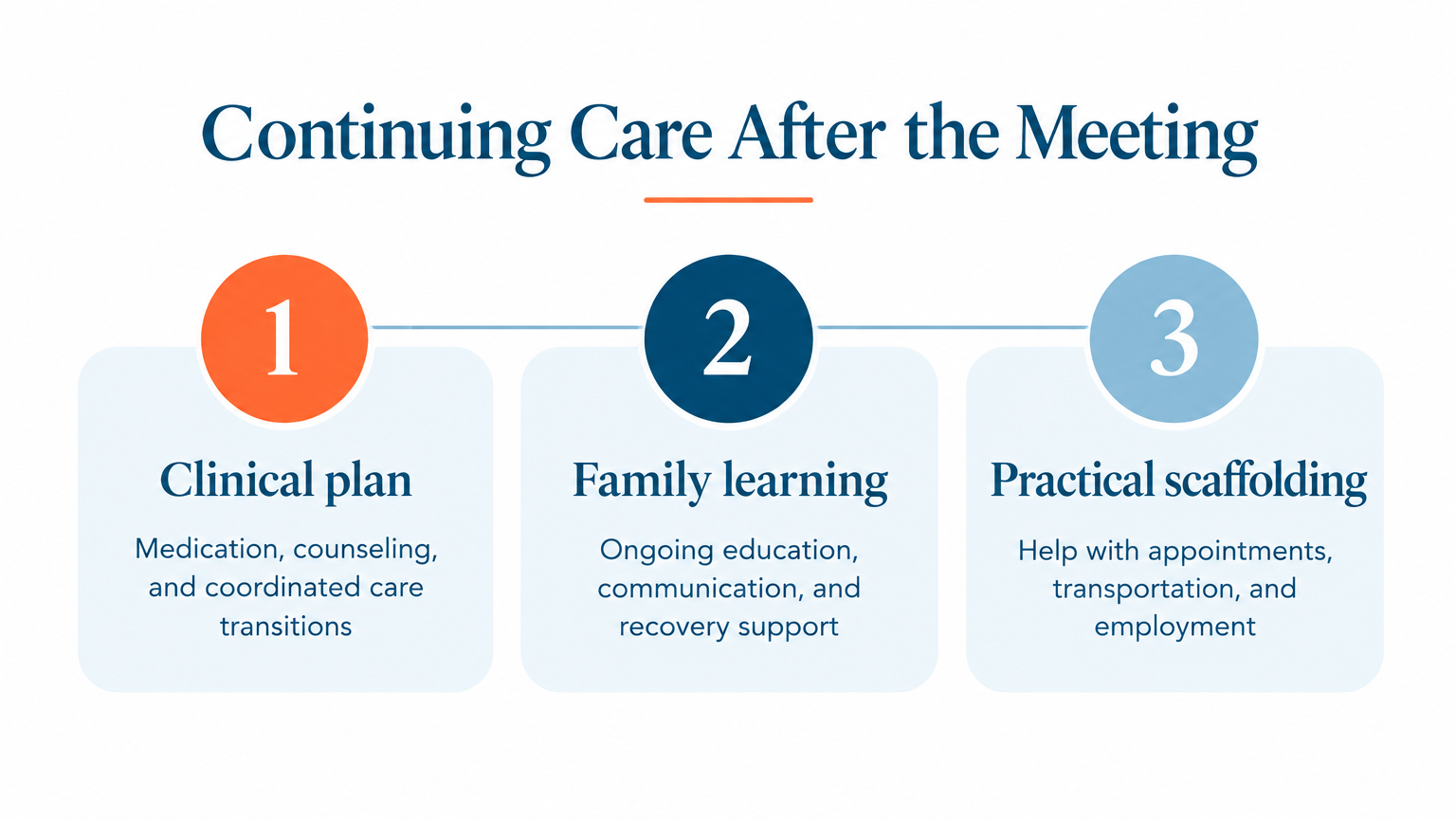
- Continuing care keeps the clinical plan, family learning, and practical scaffolding moving for weeks after admission, which is where engagement is often won or lost 12, 14.
What a Credentialed Heroin Intervention Actually Looks Like
If you're reading this at 1 a.m. with your phone in one hand and worry in the other, start here: a professional heroin intervention is not an ambush. It's a short, coordinated clinical process that a credentialed interventionist builds around your family, with a real treatment pathway waiting on the other side of the conversation. The dramatic surprise meeting you've seen on television is one small, carefully prepared moment inside a much larger plan.
A legitimate interventionist spends the days before the meeting assessing your loved one's situation, coaching the people who'll be in the room, lining up admission to a program that can actually treat opioid use disorder, and preparing an overdose-safety plan for the hours before, during, and after. The National Institute on Drug Abuse is clear that heroin use disorder is treated with a combination of medications and behavioral therapies, so the point of the meeting is to open the door to that care, not simply to extract a promise 1.
You should expect a professional who can explain their scope plainly. They coordinate engagement, family communication, logistics, and the warm handoff to clinical care, which the CDC defines as a transfer completed in person, often with the family present 6. They don't prescribe medication, run detox, or manage a medical emergency. If someone sells you a single-session miracle, keep looking. What you want is a steady adult in the room with a plan that extends well past the meeting itself.
The Four Stages of a Professionally Run Intervention
Preparation and Family Assessment
The real work starts before anyone sits down together. In the preparation stage, a credentialed interventionist spends time with you on the phone or over secure video, learning who your loved one is beyond the heroin use: their history, their medical picture, their relationships, what they're afraid of, and what they still want for their life. That assessment shapes everything that follows.
Expect specific questions. How long has heroin been in the picture? Are there other substances involved? Any recent overdoses, hospitalizations, or encounters with emergency services? Who in the family has leverage, and who tends to escalate conflict? Is there a safe place for the meeting, and is there a safe exit if it goes sideways? A good interventionist also asks about mental health history, prior treatment experiences, and medications your loved one may already be prescribed, because that information shapes which treatment program is actually a fit 1, 2.
During this phase, the interventionist usually coaches each family member individually. You practice what you'll say, trim out blame, and agree on boundaries you can realistically hold. The team also lines up admission to a program that can coordinate medications for opioid use disorder and continuing care, so the meeting opens a door that's already unlocked rather than one you still have to find 6. Preparation isn't a formality. It's where a dramatic surprise becomes a steady, planned conversation.
The Family Meeting Itself
By the time everyone is in the room, the meeting itself is usually the quietest part of the process. The interventionist leads, keeps the pace calm, and holds the structure the family rehearsed. People read what they prepared. Your loved one listens, reacts, sometimes argues, sometimes goes silent. None of that is failure. It's the conversation doing its work.
A professional meeting is specific. It names behaviors, not character. It describes what each person is willing to offer and what they're no longer willing to tolerate. It presents a concrete treatment option with a bed held, transportation arranged, and a start time already set. CDC guidance on supporting a loved one with opioid use disorder emphasizes this kind of practical, non-stigmatizing offer of help over confrontation or shame 7.
The interventionist also manages what you can't manage from inside the family: pacing, de-escalation, redirecting when a conversation starts to spiral, and reading whether your loved one is leaning toward yes. If the answer is yes, the handoff begins immediately. If the answer is no or not yet, the interventionist shifts into contingency mode, which the preparation stage already built. You are never improvising alone in the moment.
Warm Handoff to Treatment
A yes at the kitchen table only matters if the next step happens quickly. The warm handoff is how a professionally run intervention closes the gap between the decision and the first clinical appointment, and it's one of the clearest signals that you're working with a credible team.
The CDC describes a warm handoff as a transfer to community care completed in person and, when appropriate, in front of the patient and family 6. In practice, that often means the interventionist or a recovery associate accompanies your loved one directly to the program, stays through intake, and makes sure the receiving clinicians have the medical and psychosocial information gathered during preparation. Naloxone is provided before any gap in care, and the clinical team confirms what medications for opioid use disorder they can offer and when 6, 8.
For families whose loved ones live, work, or travel in another city or country, the handoff can include safe sober transport, a quiet flight with a recovery associate, and a clinician waiting on the other end. The point is simple: no one is handed a brochure and told to call tomorrow. The next appointment is already underway.
Continuing Care and Family Support
The weeks after admission are where many families expect to exhale, and where a lot of recoveries actually get decided. A professionally run intervention plans for this stage from day one. A conceptual telehealth framework for family involvement in youth opioid use disorder care maps this arc across four stages: treatment preparation, treatment initiation, treatment stabilization, and opioid use disorder recovery 13.
Continuing care is built around three things. First, the clinical plan keeps moving: medications for opioid use disorder are managed by the prescribing team, counseling continues, and transitions between levels of care are coordinated rather than improvised 1, 2. Second, the family keeps learning. Research on family involvement in substance use treatment for transition-age youth (ages 15–26) describes a continuum that spans education, communication, treatment preparation, and ongoing recovery support, not a single meeting 12. Third, the practical scaffolding stays in place. Qualitative work on social factors in opioid use disorder recovery found that family members, peer recovery specialists, and other supporters helped with appointments, transportation, and employment, which quietly makes the difference between staying engaged and falling off 14.
This is where a recovery associate, case manager, or family coach often stays active for weeks or months after the meeting, so no one is left wondering what to do on a Tuesday night when things get hard.
How to Vet a Heroin Interventionist Before You Hire Anyone
You are hiring a specialist, not booking a service. Treat the first phone call the way you'd treat a consult with any clinician: ask hard questions, listen for specifics, and notice whether the answers are grounded in actual process or in reassurance.
Start with credentials. A qualified heroin interventionist should have documented training in opioid use disorder specifically, work under or alongside licensed behavioral health professionals, and be able to describe their experience with opioid use disorder, not just substance use in general. Ask who supervises their clinical judgment and which licensed clinicians they coordinate with for medical questions. If the answer is vague, keep looking.
Then ask about scope. A credible interventionist will tell you directly that they do not prescribe medication, do not run detox, and do not manage acute medical emergencies. What they do is coordinate engagement, prepare the family, and connect your loved one to a program that can offer medications for opioid use disorder, which the FDA identifies as buprenorphine, methadone, and naltrexone 8. If someone implies they can do everything in-house, that's a flag.
Press on the handoff. Ask them to walk you through what happens in the first 24 hours after a yes. You want to hear specifics: which program, who has already been contacted, who travels with your loved one, who confirms the clinical team can start MOUD and when. The CDC describes a warm handoff as a transfer completed in person, often with the family present 6. That standard should be baseline, not a premium add-on.
Ask about safety planning. A professional should include naloxone, a written overdose-response plan, and clear instructions to call 911 and 988 in a crisis 4, 7. Ask what happens if your loved one says no, and listen for a real contingency plan rather than a shrug.
Finally, ask about continuing care. The strongest evidence base for ongoing family involvement comes from research on transition-age youth, where it is described as an ongoing arc rather than a single meeting 12. You want someone who stays in the picture for weeks after the handoff, or who hands you to a case manager or recovery associate who will.
The Treatment Pathway Behind the Meeting: What MOUD Means for Your Family
Here's the distinction that saves families weeks of confusion: the interventionist opens the door, and a licensed medical team walks your loved one through it. Those are two different jobs, and conflating them is one of the most common mistakes families make when they're vetting providers in a hurry.
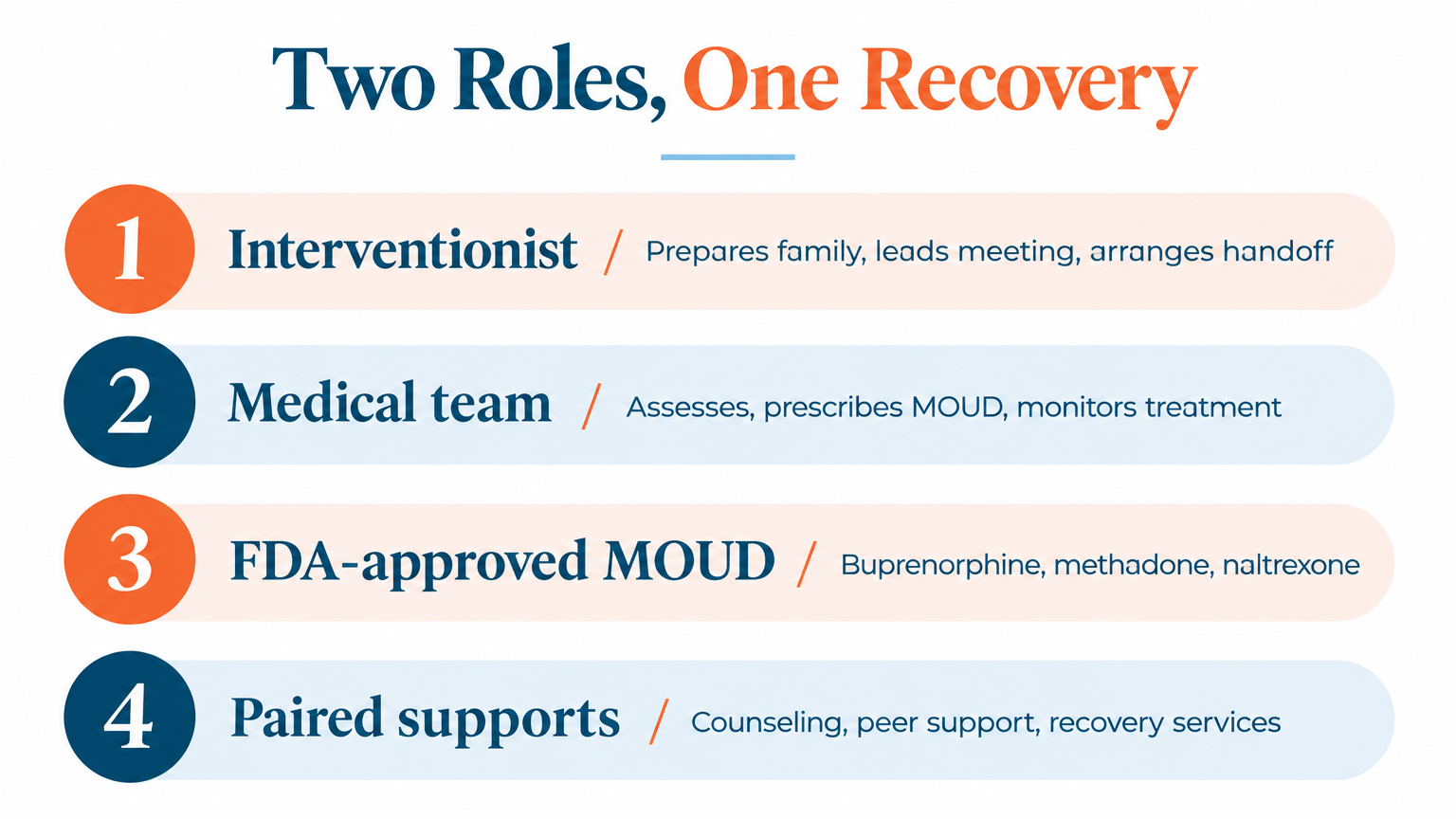
An interventionist coordinates engagement. They prepare the family, lead the meeting, arrange the warm handoff, and stay involved through continuing care. A prescribing clinician or opioid treatment program does the medical work: assessing your loved one, deciding whether medication for opioid use disorder is appropriate, starting it, and monitoring how it goes. Both roles matter. Neither replaces the other.
The FDA identifies three approved medications for opioid use disorder: buprenorphine, methadone, and naltrexone, and states that all three have been demonstrated to be safe and effective 8. SAMHSA's clinical protocol describes how these medications are paired with counseling, peer support, and other services across a real recovery plan 2. Which medication fits your loved one is a clinical decision made by qualified medical providers after an assessment, not something an interventionist should promise at the kitchen table.
Access matters here too. The FDA notes that the former DATA waiver is no longer required for eligible clinicians to prescribe buprenorphine, though DEA and state requirements still apply. Methadone for opioid use disorder is generally dispensed through opioid treatment programs 9. Practically, that means a program offering buprenorphine may do so directly through its medical staff, while methadone usually involves a specific type of licensed program. Ask the interventionist which medications the receiving program can coordinate, and how quickly.
When you call a prospective interventionist, say it plainly:
"Walk me through who prescribes, who monitors, and how the medication plan starts in the first week."
If the answer is specific, you're in good hands. If it's vague, that gap will show up later, when you least want it to.
Overdose Safety Planning in a Fentanyl-Contaminated Supply
Any heroin intervention plan you consider today has to assume one thing from the start: the supply your loved one is using may contain fentanyl, and the person who used the same amount last week may not survive the same amount tonight. That assumption changes what responsible safety planning looks like, and it should change what you expect from the professional you hire.
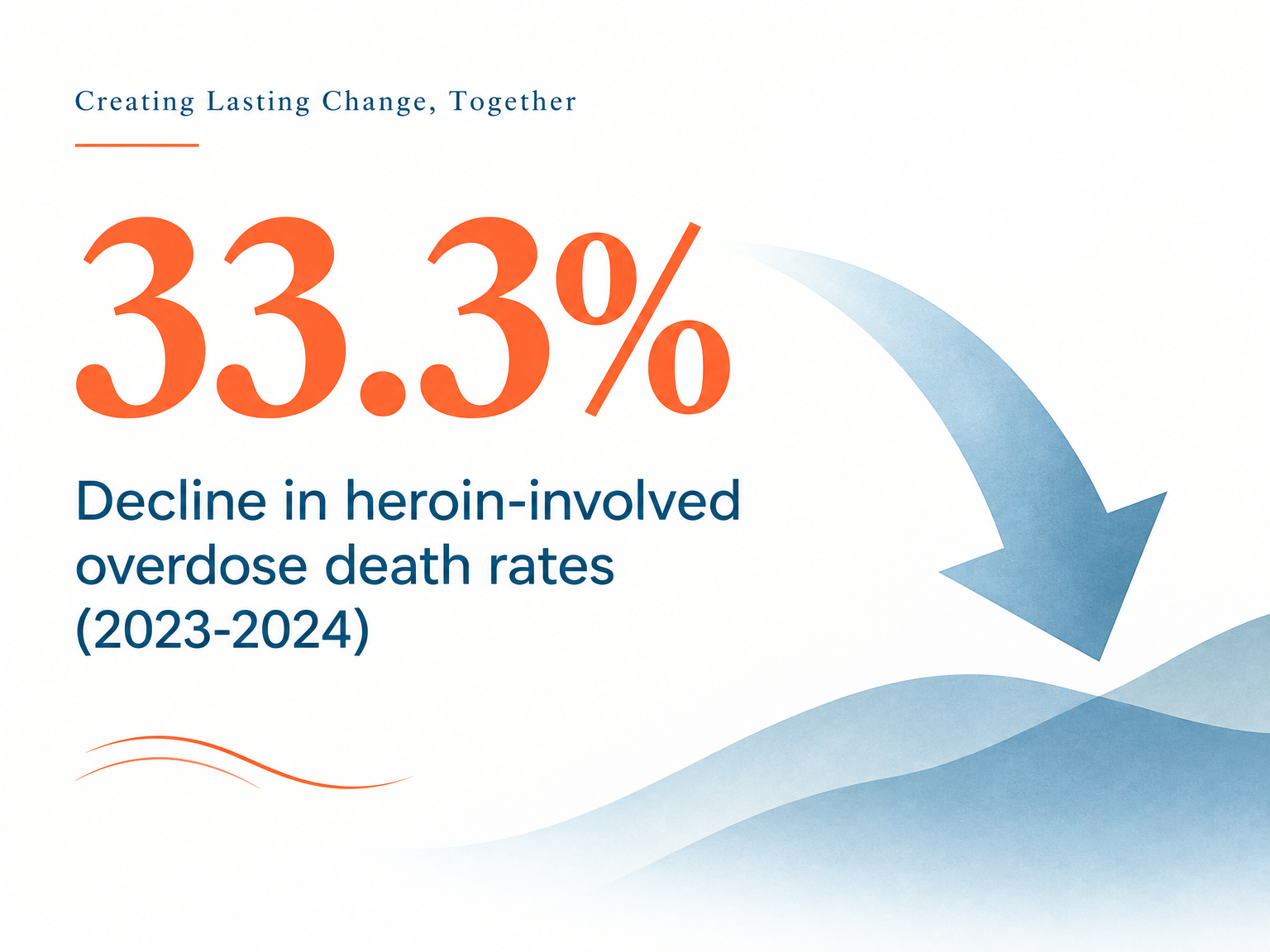
The national picture offers a thread of good news. In 2024, the heroin-involved overdose death rate fell 33.3%, from 1.2 to 0.8 deaths per 100,000 people compared with 2023, within 79,384 total U.S. drug overdose deaths reported that year 10. That decline is real, and it matters. It also doesn't change your math at the kitchen table. Population-level rates describe trends across the whole country; they don't lower the risk for one person using a drug supply that is routinely contaminated with fentanyl and fentanyl analogs 3. The honest read is that fewer people are dying from heroin-involved overdoses nationally, and your loved one is still one exposure away from an emergency. Both things are true.
Here is what a careful interventionist builds into the plan before anyone sits down. Naloxone is in the home, in the car, and with whoever is closest to your loved one in the hours around the meeting. CDC guidance is explicit that family members and caregivers should carry naloxone when someone they love is at increased risk, and that it can reverse an overdose involving heroin or fentanyl 4. More than one dose may be needed, especially with fentanyl-contaminated substances, so you have more than one on hand 5.
Everyone in the room also knows the emergency sequence. If your loved one is unresponsive or breathing is shallow or stopped, you call 911 first, give naloxone promptly if available, try to keep them awake and breathing, place them on their side, and stay with them until EMS arrives 5. Naloxone is temporary; it buys time for medical care, it doesn't replace it. If the crisis is a mental health one, including thoughts of self-harm, 988 reaches the Suicide and Crisis Lifeline.
A good interventionist writes this plan down with you, confirms who holds the naloxone, and makes sure the receiving program provides more naloxone before any gap in care at discharge 6. That is the baseline. If the professional you're interviewing treats overdose planning as an afterthought, you have your answer about whether to hire them.
Discretion, Travel, and Coordinating Care Across Time Zones
If your family's situation includes a public name, a demanding career, or a loved one who lives several flights away, discretion isn't a luxury line item. It's part of whether the plan works at all. A well-run heroin intervention can be organized quietly, moved across borders, and coordinated across time zones without the people around your loved one piecing together what's happening.
Start with the privacy questions you're allowed to ask out loud. Who on the interventionist's team will know your loved one's name, and who will only know a case number? How is video and document communication secured? Will travel be arranged through private aviation or discreet commercial routing, and who accompanies your loved one through airports, customs, and intake? Where is the family meeting held, and does the venue have staff who've handled sensitive arrivals before? If a professional bristles at those questions, that itself is useful information.
Geography adds a second layer. When family members are scattered across cities or continents, the preparation stage often happens over secure video rather than in a single living room. A peer-reviewed conceptual framework for telehealth-supported family involvement in youth opioid use disorder care maps this across four stages: treatment preparation, treatment initiation, treatment stabilization, and recovery, which illustrates how a spouse in London, a parent in New York, and an interventionist in Florida can rehearse the same conversation before anyone boards a plane 13. The in-person meeting still happens; the surrounding coordination doesn't have to wait on everyone being in one room.
Transitional support is what keeps the plan from unraveling at the airport. A recovery associate, sometimes called a sober companion, can travel with your loved one from the family meeting to the receiving program, stay through intake, and remain for the first days of stabilization if that's what the clinical team recommends. That continuity matters because practical scaffolding, meaning appointment reminders, scheduling, transportation, and the small logistics of ordinary life, consistently shows up in research as part of what helps people stay engaged in treatment 14.
One last piece: naloxone travels too. Confirm who carries it on the trip, confirm the receiving program provides more before any gap in care at discharge, and keep 911 and 988 saved in every family member's phone regardless of what city they're waking up in 4, 6. Discretion and safety are not a trade-off. A credible team gives you both.
If You're a Referring Professional Vetting an Interventionist for a Client Family
A quick scope note: this section is for the attorney, psychiatrist, therapist, dietitian, wealth manager, or trust officer who has been asked to recommend a heroin interventionist on behalf of a client family. Your name is going on the referral, so you need to vet the professional the way you'd vet any specialist you're attaching to a sensitive matter.
Start with four questions that separate credible operators from the rest.
- What documented training does the interventionist have in opioid use disorder, who supervises their clinical judgment, and which licensed behavioral health professionals do they coordinate with for medical decisions?
- What does their warm handoff actually look like in the first 24 hours after a yes, and can they name a receiving program that coordinates medications for opioid use disorder, meaning buprenorphine, methadone, or naltrexone 6, 8?
- What is the written overdose-safety plan before, during, and after the meeting, including naloxone placement and clear instructions to call 911 and 988 4, 7?
- Who stays involved for the weeks after admission, recognizing that the strongest evidence base for family involvement across preparation, initiation, stabilization, and recovery comes from research on transition-age youth and conceptual telehealth frameworks for youth opioid use disorder care 12, 13?
Listen for specifics, not reassurance. If the answers include named programs, defined roles, and a continuing-care plan your client family can hold in their hands, that is a referral you can stand behind.
Starting the Conversation Tonight
You don't have to have the whole plan figured out before you make the first call. You just need to take one step that moves this out of your head and into a professional's. Write down what you know: how long heroin has been in the picture, any recent overdoses or hospitalizations, which family members are already on the same page, and what you're most afraid of if nothing changes. That short page is what a credentialed interventionist will ask about on the first call anyway.
If your loved one is in acute danger tonight, call 911. If someone is in a mental health crisis or thinking about self-harm, 988 reaches the Suicide and Crisis Lifeline. Keep naloxone close and know how to use it 4, 5.
When you're ready, Next Level Wellness & Behavioral Health is here for a confidential conversation, for families and for the professionals who refer them. Founded by Amanda Marino, our concierge approach to interventions, case management, and recovery associates is built around Creating Lasting Change, before, during, after, or in place of treatment.
Frequently Asked Questions
How quickly can a heroin intervention be arranged?
Timing varies by family and situation. A credentialed interventionist typically uses the first several days to assess the situation, coach family members, and confirm admission to a program that coordinates medications for opioid use disorder before the family meeting takes place. If your loved one is in acute medical danger tonight, call 911 first and arrange the intervention afterward.
What credentials should a heroin interventionist have?
Look for documented training in opioid use disorder specifically and clear coordination with licensed behavioral health clinicians for medical decisions. Ask who supervises their clinical judgment and which programs they refer to for medications like buprenorphine, methadone, or naltrexone 8. A credible professional will name their scope plainly and explain who handles prescribing, monitoring, and continuing care after the meeting.
What happens if my loved one refuses treatment at the family meeting?
A no at the meeting is not the end of the process. A skilled interventionist builds contingency plans during preparation, which may include follow-up conversations, continued family coaching, and keeping the admission slot open. Research on young adults with opioid use disorder describes family involvement and assertive outreach as promising engagement strategies 11. Keep naloxone on hand, maintain the boundaries you prepared, and stay in contact with your interventionist.
Will the interventionist prescribe medication for opioid use disorder?
No. An interventionist coordinates engagement, family preparation, and the warm handoff to clinical care. Prescribing buprenorphine, methadone, or naltrexone is the job of a licensed medical provider or opioid treatment program after a clinical assessment 8. Buprenorphine no longer requires the former DATA waiver for eligible clinicians, while methadone for opioid use disorder is generally dispensed through opioid treatment programs 9. Ask the interventionist which programs can start medication quickly.
How do you keep an intervention private for a high-profile family?
Discreet planning starts with the first call. Ask who on the team sees your loved one's name versus a case number, how video and documents are secured, and whether travel can be arranged through private aviation or quiet commercial routing with a recovery associate accompanying intake. A conceptual telehealth framework for family involvement in youth opioid use disorder care shows how remote preparation across time zones can be coordinated, so planning can happen without everyone gathering in one room first 13.
What should we do if an overdose happens before or during the intervention process?
Call 911 immediately. Give naloxone promptly if available, keep the person awake and breathing, place them on their side, and stay with them until EMS arrives 5. More than one dose of naloxone may be needed with fentanyl-contaminated substances 5. Naloxone reverses opioid overdose temporarily; it does not replace emergency medical care 4. If someone is in a mental health crisis or thinking about self-harm, 988 reaches the Suicide and Crisis Lifeline.
References
- What are the treatments for heroin use disorder?. https://nida.nih.gov/publications/research-reports/heroin/what-are-treatments-heroin-use-disorder
- TIP 63: Medications for Opioid Use Disorder. https://library.samhsa.gov/sites/default/files/SAMHSA_Digital_Download/PEP20-02-01-005_0.pdf
- National Fentanyl Prevention and Awareness Day™ Toolkit - CDC. https://www.cdc.gov/overdose-prevention/php/toolkits/fentanyl-prevention-awareness-day.html
- Reverse Opioid Overdose to Prevent Death | Overdose Prevention. https://www.cdc.gov/overdose-prevention/reversing-overdose/index.html
- How and When to Use Naloxone for an Opioid Overdose. https://www.cdc.gov/overdose-resources/pdf/Naloxone_FactSheet_Family_and_Caregivers_How_and_When_to_use_Naloxone_508.pdf
- Linking People with Opioid Use Disorder to Medication Treatment. https://www.cdc.gov/drugoverdose/featured-topics/linkage-to-care.html
- Treatment of Opioid Use Disorder. https://www.cdc.gov/overdose-prevention/treatment/opioid-use-disorder.html
- Information about Medications for Opioid Use Disorder (MOUD) - FDA. https://www.fda.gov/drugs/food-and-drug-administration-overdose-prevention-framework/information-about-medications-opioid-use-disorder-moud
- Patients with Opioid Use Disorder Need You. https://www.fda.gov/media/178651/download?attachment
- Drug Overdose Deaths in the United States, 2023–2024 - CDC. https://www.cdc.gov/nchs/products/databriefs/db549.htm
- Engagement, Initiation, and Retention in Medication Treatment for Opioid Use Disorder Among Young Adults: A Narrative Review of Challenges and Opportunities. https://pmc.ncbi.nlm.nih.gov/articles/PMC11392652/
- Family Involvement in Treatment and Recovery for Substance Use Disorders Among Transition-Age Youth. https://pmc.ncbi.nlm.nih.gov/articles/PMC8380649/
- Conceptual framework for telehealth strategies to increase family involvement in treatment and recovery for youth opioid use disorder. https://pmc.ncbi.nlm.nih.gov/articles/PMC9830952/
- Social Factors. https://pmc.ncbi.nlm.nih.gov/articles/PMC9892350/
Insight Beyond Treatment
At Next Level Wellness & Behavioral Health, we believe meaningful change starts with perspective, not just protocols.
That philosophy is directly led by Amanda Marino, whose voice in behavioral health extends beyond clinical settings into leadership, culture, and personal growth.
Through keynote speaking and live events, Amanda explores the deeper themes that show up in recovery, family systems, and life transitions: authenticity, resilience, accountability, and the courage to change. Her work invites audiences to move past labels and into honest conversations that create lasting impact.
A Voice Shaping the Conversation
The topics explored here—change, self-awareness, recovery, and growth—are the same themes Amanda Marino brings to audiences nationwide through speaking engagements and live events.
Known for her appearances on A&E’s Intervention and Digital Addiction, Amanda speaks to organizations, communities, and leadership teams about navigating adversity, embracing vulnerability, and building lives rooted in purpose. Her message resonates far beyond treatment, offering insight that applies to families, professionals, and anyone standing at a crossroads.


Heal on your terms—any time, anywhere.