.svg)

Sober Companion Boca Raton, FL: Aftercare Support

Key Takeaways
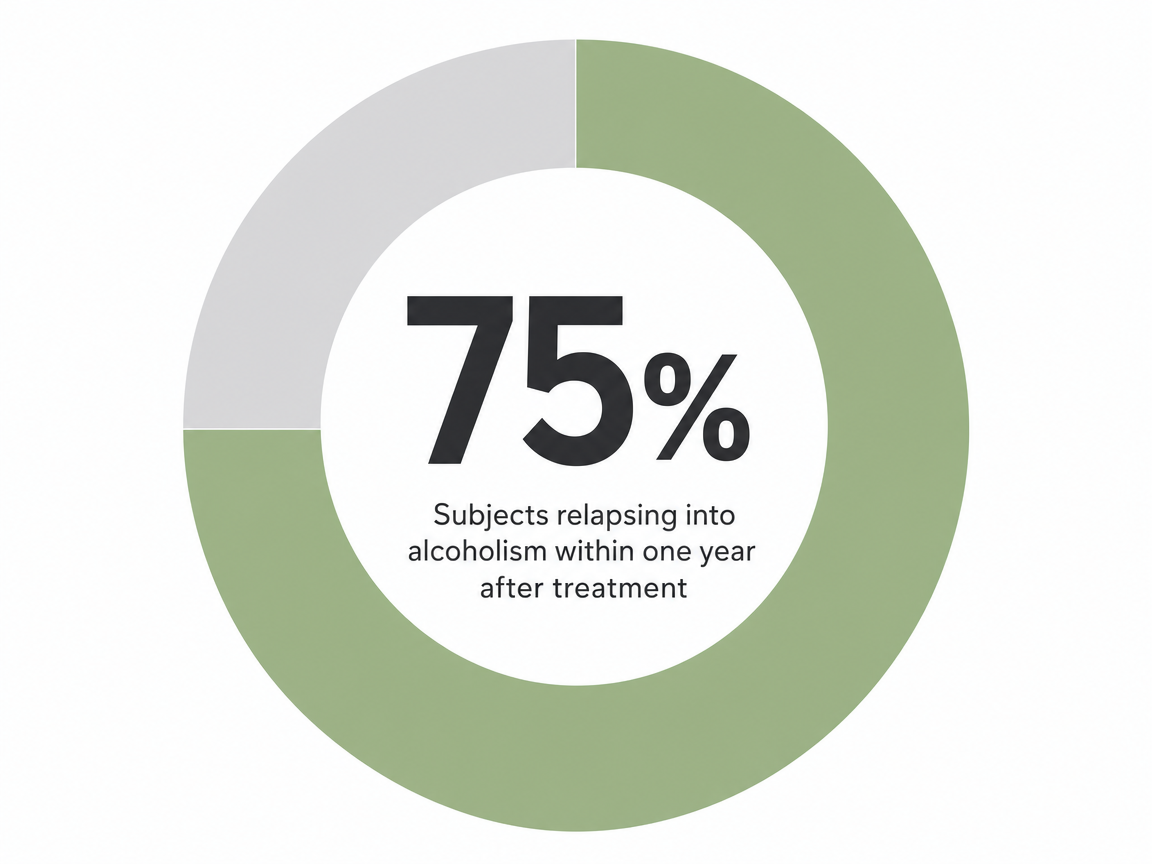
- The post-discharge window in Boca Raton is where written aftercare plans most often unravel, with over 75% of alcohol treatment subjects relapsing within a year.11
- A sober companion operates between your discharge plan and daily life, handling presence, case management, and logistics rather than clinical therapy, sponsorship, or security work.
- Florida's 65D-30.011 sets the floor for aftercare, requiring after-hours availability and documented referrals, so ask any Boca provider how a Saturday-night call is handled.4
- Compare companion coverage against recovery residences, outpatient programs, and sponsors before hiring, and weigh peer credentials, coordination with your outpatient team, and a clear step-down plan by day 90.
The First 90 Days Are Where Aftercare Plans Quietly Fall Apart
You already know the part nobody likes to say out loud: leaving treatment is the easy day on paper, and the hardest day in practice. The discharge folder is thick. The aftercare plan is signed. And then Tuesday afternoon arrives, and you are alone in a quiet condo off Glades Road with a phone full of numbers you have not yet called.11
This is the window where plans hold or stop holding. In a clinical review of more than 500 alcoholism outcome studies, over 75% of subjects relapsed within one year of treatment. That figure describes alcohol research specifically, not every substance and not every level of care, but it points to the same operational truth your discharge team already knows: the post-treatment window is where structured support has to actually show up, hour by hour, not just exist on paper.
A sober companion is not a motivational add-on. It is the staffing decision that turns a written aftercare plan into a kept appointment, a filled prescription, a real bedtime, and a phone call made instead of avoided. The rest of this article walks through what that work looks like in Boca Raton, what Florida actually requires of aftercare providers, and how to choose support that fits a private, professional life.
What a Sober Companion Actually Does (and What They Don't)
The Operational Layer Between a Discharge Plan and Real Life
Think of your aftercare plan as architecture and a sober companion as the general contractor on site. The plan tells you the IOP schedule, the medication list, the therapy cadence, the meeting recommendations, and the lifestyle changes your clinical team wants to see. None of that builds itself.
A sober companion is the person who actually shows up at 6:45 a.m. to make sure you make the 7:30 group, who notices that you have skipped lunch three days running, who keeps the medication routine consistent when your sleep is still wrecked, and who quietly reroutes the afternoon when your old neighborhood is on the way home. The job is observational, logistical, and relational, in that order.
What it is not: clinical therapy, sponsorship, or a security detail. A companion does not run your treatment, work the steps with you, or physically prevent you from doing anything. The leverage is presence, structure, and an honest read on how you are actually doing, paired with case management that loops your outpatient team in fast when something starts to drift.3
That is the operational layer between the discharge folder and a Tuesday afternoon that holds.
Sober Companion vs. Recovery Residence vs. Outpatient vs. Sponsor
These four supports get blurred together in conversation, and that confusion costs people money and momentum. Each one does a specific job, and a strong Boca aftercare plan usually pulls from more than one.
Stack them honestly: outpatient handles the clinical hour, the residence or your own home handles the sleeping hour, the sponsor handles the spiritual and step work, and the companion handles every hour in between, plus the coordination across all three.
Reading Relapse Before It Happens: The Three-Stage Model in Practice
Emotional Relapse: Sleep, Isolation, and the Quiet Drift
Here is the part of recovery that almost nobody talks about clearly: relapse rarely starts with a drink or a pill. It starts weeks earlier, in a stage Melemis calls emotional relapse, where you are not thinking about using at all. You are just slowly stopping the things that keep you well.2
Sleep slips first. You stay up an hour later, then two. The 7:30 a.m. group becomes a stretch, so you skip it once. You stop returning the text from your therapist. You eat at your desk. You decline the dinner invitation you would have said yes to three weeks ago. Your partner asks how you are doing and you say fine, and you mostly mean it.
This is what a sober companion is actually trained to see. Not the dramatic moment, but the small reversal: the skipped meal, the closed bedroom door at 4 p.m., the canceled meeting that gets rescheduled and then never happens. The companion's job at this stage is not confrontation. It is gentle interruption, a walk, a phone call to your case manager, a quiet adjustment to tomorrow's schedule before the drift becomes a direction.
Mental Relapse: Romanticizing, Bargaining, Planning
If emotional relapse goes unaddressed, the thinking starts to shift. Mental relapse is the stage where part of you wants to use and another part still does not, and the two are arguing. This sounds dramatic on the page. In real life, it sounds like, "One glass of wine at the firm dinner would be fine," or "I was never really that bad," or "I could probably handle Aspen this year."2
You may find yourself driving past your old dealer's neighborhood without quite deciding to. You may start hanging out with one specific friend from before. You may suddenly remember the good parts of using and forget the hospital, the apology emails, the look on your kid's face. Melemis describes this as bargaining, lying, and looking for relapse opportunities that seem accidental.2
A companion who knows you well hears the language change before the behavior does. The intervention here is honest conversation, a call to your sponsor or therapist, and a hard look at the next 48 hours of your calendar. Naming it out loud often shrinks it.
Physical Relapse: Why It's Almost Never the First Sign
By the time physical relapse happens, the actual use, the previous two stages have usually been running for days or weeks. That is the whole point of the model: physical relapse is the last domino, not the first. Treating it as a sudden event misses every chance to interrupt it.2
This is why a companion's daily presence matters more than any single dramatic intervention. The work is catching emotional relapse on a Wednesday so you never reach the parking-lot decision on a Saturday. It is also why discharge plans that rely only on weekly therapy and good intentions tend to thin out: a one-hour clinical touchpoint cannot see the 167 hours in between.
Visual: Three-stage relapse model (emotional, mental, physical) annotated with specific behaviors a companion observes at each stage, adapted from Melemis.2
A Working Timeline: First 72 Hours, First Two Weeks, First 90 Days
Hours 0–72: Airport Pickup, Home Setup, Medication Routine
The first three days set the tone for everything that follows, and they are almost entirely logistical. A companion's day-one work in Boca usually starts at PBI or FLL with a curbside pickup, your bags in the car, and a quiet drive home that is not a debrief. You just got out. You do not need to perform recovery in the car.
Once you are home, the work is unglamorous: a sweep of the kitchen, the medicine cabinet, the bar cart, the guest room your cousin used last spring. Anything that does not belong in early sobriety leaves the house. Prescriptions get organized into a daily routine, refills are scheduled, and the pharmacy is identified before you need it at 9 p.m. on a Saturday.
Then the calendar. Your first IOP session, your first therapy appointment, your first meeting, your first physician follow-up, all entered with buffer time and a plan for who is driving. Florida's aftercare standard expects after-hours availability for exactly this window, when something almost always shifts on the first night home. The goal of these 72 hours is not progress. It is a soft landing.4
Weeks 1–2: Meeting Cadence, Case Management, Sleep Architecture
By the end of the first week, the adrenaline of being home wears off and the real work starts. This is the stretch where a companion earns the role, because almost every problem here is a problem of consistency, not crisis.
Meeting cadence gets locked in. If your plan calls for 90 meetings in 90 days, the companion is the person making sure you get to one each day, including the Sunday you would rather skip. Case management runs in parallel: weekly check-ins with your therapist, prescriber, and outpatient team, with notes shared so nobody is working from a stale picture of how you are doing. Peer-credentialed support helps here, because shared experience tends to surface what a clinical-only review misses.7,3
Sleep gets engineered like a project. A consistent wake time, screens out of the bedroom, no caffeine after 2 p.m., a real wind-down hour. Disrupted sleep is one of the earliest signals on the emotional relapse side of the model, and the companion treats it that way. By day 14, you should have a rhythm that runs whether you feel motivated or not.2
Days 14–90: Work Re-Entry, Step-Down, Travel Coverage
Somewhere between week two and week four, the question of work comes up. Maybe it is a return to a downtown Boca office, maybe a remote schedule with the camera on, maybe a family business where you cannot exactly take a discreet absence. The companion's job here is to phase the re-entry, not stamp it approved on day 15.
That usually looks like reduced hours first, in-person before travel, predictable days before back-to-back deals or court dates. A live-in companion may step down to hourly coverage, present in the morning routine and again in the evening, with the workday left to you. If your role requires travel, the companion can fly with you, handle airport sober transport, and keep meeting attendance possible from a hotel in another city.
By day 60, you and your case manager are usually evaluating step-down: fewer hours, longer gaps, a shift toward independent recovery with the companion on call rather than on site. The 90-day mark is rarely a hard exit. It is the point where the structure has become yours, not theirs.
Insight Beyond Treatment
At Next Level Wellness & Behavioral Health, we believe meaningful change starts with perspective, not just protocols.
That philosophy is directly led by Amanda Marino, whose voice in behavioral health extends beyond clinical settings into leadership, culture, and personal growth.
Through keynote speaking and live events, Amanda explores the deeper themes that show up in recovery, family systems, and life transitions: authenticity, resilience, accountability, and the courage to change. Her work invites audiences to move past labels and into honest conversations that create lasting impact.
Does Continuing Care Actually Hold? What the Evidence Shows
Here is the honest version: there is no large randomized trial of sober companions specifically. What does exist is a substantial body of research on continuing care, the broader category that companion work sits inside, and that evidence is strong enough to plan around.
The NIAAA's review of continuing care studies for substance use disorder found that recovery management checkups, a structured form of ongoing post-treatment monitoring, produced significantly better substance use outcomes and quicker reentry into treatment when someone did relapse, at a cost-effectiveness of roughly $23.38 per day abstinent. The same body of research found that adding modest financial incentives to continuing care nearly doubled session attendance, though attendance gains did not always translate to better substance use outcomes on their own. Two takeaways matter here. First, structured continuing care is cheap relative to what relapse costs. Second, attendance is necessary but not sufficient; what happens during and between those touchpoints is where the work lives.1
That second point is exactly what a sober companion operationalizes. The clinical model says relapse prevention works best when paired with adjunctive medication and applied immediately after treatment. The companion is the person making sure the medication is taken, the IOP session is attended, and the relapse prevention skills your therapist taught you on Monday are actually used on Friday night. Peer-credentialed support adds a second layer to that, with research consistently showing peer involvement improves quality of life and reduces stigma in ways clinical-only contact does not reach.7,11
Translation for your aftercare plan: the evidence does not say a companion guarantees an outcome. It says structured, sustained, in-the-life support meaningfully shifts the odds, and the cost of that structure is low compared to the cost of starting over.

Florida-Specific Standards Boca Companions Should Already Know
What 65D-30.011 Requires of Aftercare in This State
Florida's aftercare rule is short, but it sets the floor any companion in Boca should already be working above. Under 65D-30.011, aftercare is defined as structured services for people who have completed an episode of treatment and need continued observation and support to maintain recovery, including relapse prevention education, trigger identification, and activities that support daily functioning.4
Two requirements in that rule deserve attention when you are choosing support:4
- Providers are expected to offer services outside normal business hours so the people they serve are not stranded between Friday at 5 p.m. and Monday morning .
- When something surfaces that a companion cannot handle alone, the provider is expected to refer out for the needed service and document that follow-up.
Translation: ask any companion provider how they handle a 9 p.m. Saturday call, who picks up, and how that handoff to your outpatient team is recorded. If the answer is vague, keep looking.
HB 1163 and the Recovery Residence Landscape Around Boca
You do not need to memorize the bill, but you should understand the landscape your companion is coordinating with. Florida currently has more than 750 certified recovery residences statewide, with 244 of them at Level IV, the clinically supervised tier most closely tied to outpatient care. Palm Beach County has long been one of the densest markets for that housing, which is exactly why Boca companions tend to know the local operators by name.5
HB 1163, effective July 1, 2025, tightens the picture in two useful ways. It adds auditing requirements for Level IV residences and creates a Substance Abuse and Recovery Residence Efficiency Committee inside DCF. It also limits how local governments can block certified residences in multifamily zones, which expands legitimate housing options for someone stepping down from treatment in Boca.5,6
For your plan, this matters when a residence is part of the mix. A companion who knows which homes are certified, audited, and clinically aligned with your outpatient team will save you weeks of trial and error.
What You Are Actually Paying a Companion to Do
Companion pricing in Boca varies, and any honest provider will tell you that. What does not vary much is the underlying job description, and that is what you are actually buying. It helps to think of it in three layers, not as a menu of features.
The first layer is presence. Live-in coverage means a companion in your home overnight, awake during the high-risk hours, present for the morning routine. Hourly coverage means scheduled blocks: morning meetings, afternoon appointments, evening wind-down. Travel coverage means the companion flies with you, handles airport transfers, and stays adjacent to your hotel. You are paying for the right person to be in the right room at the right hour.
The second layer is case management: weekly coordination with your therapist, prescriber, IOP team, and sponsor so nothing runs in isolation. Notes get shared. Medication routines get protected. The Florida aftercare standard expects after-hours availability and documented referrals when something exceeds the companion's scope, and that coordination is non-negotiable.3,4
The third layer is logistics: sober transport, household reset, meeting and appointment routing, and the quiet work of removing decisions you should not have to make in week two.
Concierge Realities: Returning to a Practice, a Business, a Family
Recovery on a private, professional schedule looks different from the rehab-aftermath story most people picture. You may be returning to a litigation practice with depositions on the calendar, a family business where your absence was noticed by people who count on you, or a household with kids who need normal back. Boca's recovery population skews educated and working, which is part of why the local aftercare ecosystem grew up around discretion in the first place.12
What concierge support looks like in practice: a companion who arrives in business attire and reads as a personal assistant in your office building lobby, who knows when to wait in the car during a client lunch, who handles the medication routine without making it visible to the housekeeper. Travel works the same way. A flight to a board meeting in New York gets routed with sober transport on both ends and a hotel within walking distance of the venue, so you are not alone in a strange city at 9 p.m.
Family re-entry is its own category. A companion can hold the structure that lets you be a parent again at dinner without being the recovery enforcer at the same table. That separation matters. It protects the relationships you came home for.3
Choosing Support That Fits a Private, Professional Life in Boca Raton
You are not shopping for a program. You are hiring a person who will be in your kitchen at 7 a.m. and your car on the way to a meeting that matters. That changes the questions worth asking.
Ask how the provider handles a Saturday-night call, and listen for a specific answer about who picks up and how it gets documented to your outpatient team. Ask whether companions hold peer credentials, since shared experience consistently surfaces what clinical-only contact misses. Ask how they coordinate with the certified residences, prescribers, and IOPs already in your plan. Ask what step-down looks like at day 30, day 60, day 90, so you are building toward your own footing rather than a permanent staffing line.3,4,7
Wanting privacy is reasonable. Wanting your life back is reasonable. The right support in Boca Raton, whether through Next Level Wellness & Behavioral Health or another concierge provider, is the one that makes Tuesday afternoon hold.
Frequently Asked Questions
How is a sober companion different from a sponsor or a recovery residence?
A sponsor is an unpaid 12-step peer who walks you through the steps. A recovery residence is sober peer housing, often Level IV under Florida's framework when clinically supervised. A sober companion is paid one-on-one support in your own environment, on your schedule, coordinating with your outpatient team. Most strong aftercare plans use more than one.5
How long do most people work with a sober companion after treatment?
The first 90 days post-discharge is the common window, with live-in or near-daily coverage in weeks one and two, then a step-down to hourly or on-call by day 60. Some clients keep light coverage longer for travel or specific stressors. Continuing care research suggests longer engagement tends to produce more consistent outcomes.1
Can a sober companion travel with me or accompany me back to work?
Yes. Travel coverage is a standard part of the role: airport pickups, flights, hotel stays, and ground transport on both ends. For work re-entry, a companion can read as a personal assistant in your office building, hold the medication routine, and route your day so meetings, IOP, and recovery appointments all fit without visible disruption.
What signs is a companion actually watching for day-to-day?
The early signals from Melemis's emotional relapse stage: disrupted sleep, isolation, skipped meals, missed meetings, and pulling back from people who matter. Later, language shifts toward romanticizing or bargaining. The companion's job is to notice the small reversal on a Wednesday so it does not become a parking-lot decision on a Saturday.2
What standards apply to aftercare providers in Florida?
Florida Admin Code 65D-30.011 defines aftercare as structured services for continued observation and support, including relapse prevention education, trigger identification, after-hours availability, and documented referrals when something exceeds the provider's scope. When asking a provider how they handle a 9 p.m. Saturday call, you are asking them to demonstrate compliance with that standard.4
Will my outpatient team and sober companion coordinate care?
They should, and that coordination is a core part of what you are paying for. Expect weekly case management touchpoints with your therapist, prescriber, and IOP team, with shared notes so nobody is working from a stale picture. Peer-credentialed companions add a layer clinical-only contact tends to miss. Ask exactly how documentation flows.4,7
References
- Impact of Continuing Care on Recovery From Substance Use Disorder. https://pmc.ncbi.nlm.nih.gov/articles/PMC7813220/
- Relapse Prevention and the Five Rules of Recovery. https://pmc.ncbi.nlm.nih.gov/articles/PMC4553654/
- Recovery and Support. https://www.samhsa.gov/substance-use/recovery
- Fla. Admin. Code Ann. R. 65D-30.011 - Standards for Aftercare. https://www.law.cornell.edu/regulations/florida/Fla-Admin-Code-Ann-R-65D-30-011
- [PDF] Recovery Residences - Florida Senate. https://www.flsenate.gov/Session/Bill/2025/1163/Analyses/h1163d.HHS.PDF
- CS/CS/HB 1163 (2025) - Certified Recovery Residences. https://www.flhouse.gov/Sections/Bills/billsdetail.aspx?BillId=81849
- The Impact of Peer-Based Recovery Support Services. https://pmc.ncbi.nlm.nih.gov/articles/PMC12528342/
- Office of Behavioral Health and Substance Use Disorders - Palm Beach County. https://discover.pbc.gov/communityservices/BHSUCOD/Pages/Funded-Agencies.aspx
- Boca Raton city, Florida - U.S. Census Bureau QuickFacts. https://www.census.gov/quickfacts/fact/table/bocaratoncityflorida/PST045224
- Measuring Outcomes of Peer Recovery Support Services. https://archive.hshsl.umaryland.edu/server/api/core/bitstreams/0ba2b7eb-c14f-483e-99a3-b76edfd6eb8c/content
- Relapse Prevention. https://pmc.ncbi.nlm.nih.gov/articles/PMC5844157/
- Boca Raton city, Florida - U.S. Census Bureau QuickFacts. https://www.census.gov/quickfacts/fact/table/bocaratoncityflorida/PST045225
A Voice Shaping the Conversation
The topics explored here—change, self-awareness, recovery, and growth—are the same themes Amanda Marino brings to audiences nationwide through speaking engagements and live events.
Known for her appearances on A&E’s Intervention and Digital Addiction, Amanda speaks to organizations, communities, and leadership teams about navigating adversity, embracing vulnerability, and building lives rooted in purpose. Her message resonates far beyond treatment, offering insight that applies to families, professionals, and anyone standing at a crossroads.


Heal on your terms—any time, anywhere.