.svg)

How Outpatient Treatment for Alcohol Works for Professionals

Key Takeaways
- Treatment setting is not the deciding factor in alcohol recovery; matching care to your medical picture, readiness, and home environment drives outcomes far more than whether you sleep at a facility.4
- Clinicians use the ASAM six dimensions to determine fit, so an honest self-assessment of withdrawal risk, biomedical stability, mental health, readiness, relapse potential, and recovery environment shapes the right level of care.5
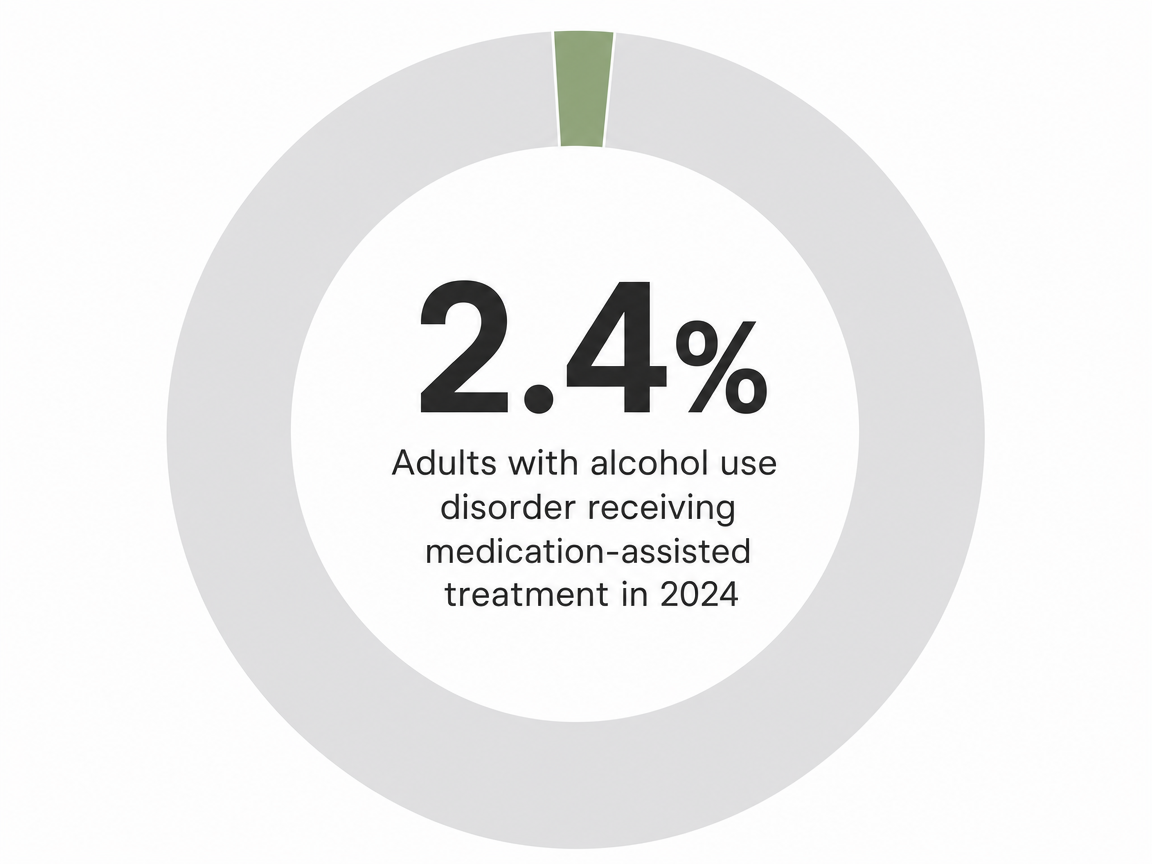
- Naltrexone, acamprosate, and disulfiram are FDA-approved medications routinely paired with counseling in outpatient care, yet only 2.4% of adults with AUD received medication-assisted treatment in 2024.6
- Length of engagement predicts results more than where you start, so plan for twelve to eighteen months of active care and build a written return-to-use protocol before you need it.9
The Decision You're Actually Making
You're not deciding whether you have a problem. You already know. What you're deciding is whether you can get real help without setting your career on fire.
That's a different question, and it deserves a different answer than the one most articles give you. The framing you've probably absorbed — that serious help means disappearing for 30 days to a facility — assumes your job, your license, and your family schedule are flexible. They're not. Research indicates that for alcohol use disorder, there is no overall advantage for residential or inpatient treatment over outpatient care, and outcomes hinge more on matching the treatment to the person than on the address where it happens.4
Read that again. The setting is not the variable that decides whether you get well.
This article walks you through how outpatient treatment for alcohol actually works when you're a working professional — the weekly cadence, the medications most people are never told about, the privacy mechanics, and how clinicians decide whether outpatient is the right level of care for you. You'll see how to evaluate a program on clinical rigor, not convenience, and what to do if you drink during treatment without jeopardizing your job.
You came here looking for specifics. You'll get them. And you'll leave with a clearer understanding of a decision that, until now, has probably felt like it had only two difficult options.
What the Evidence Says About Treatment Setting
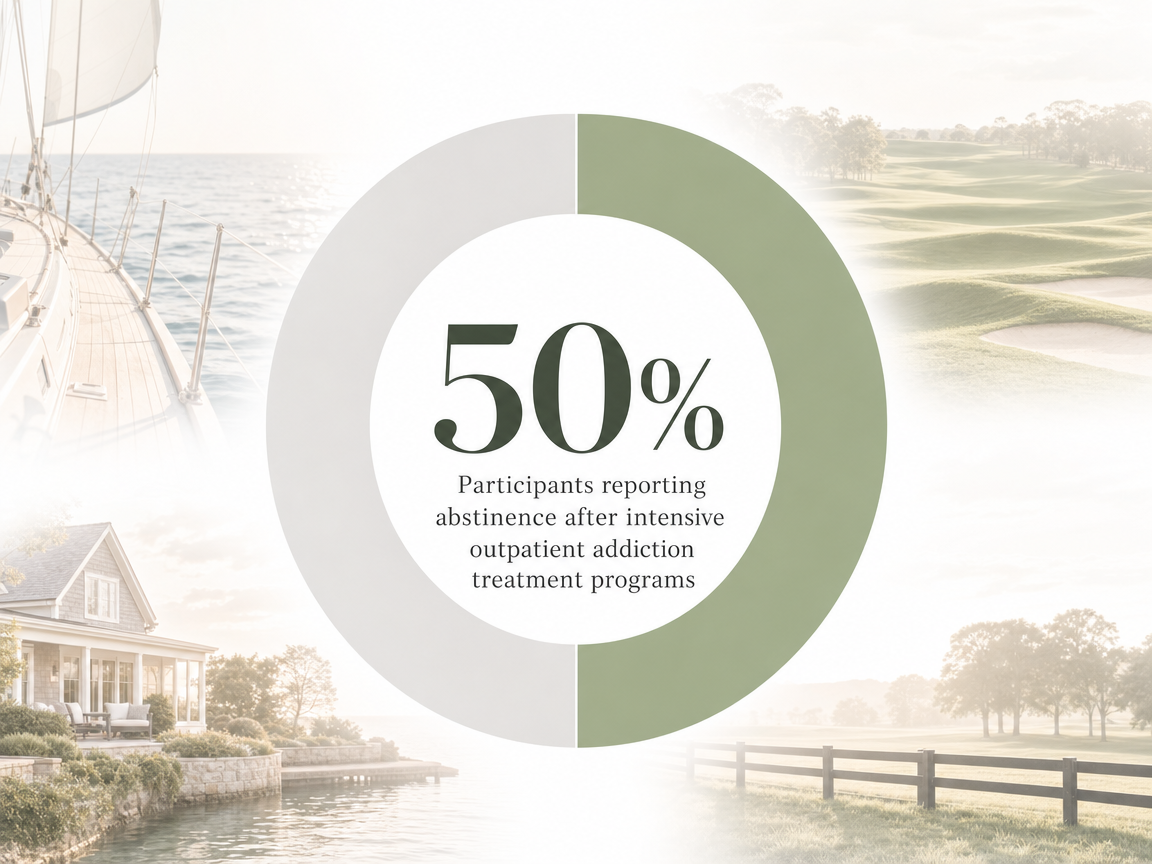
When researchers measure outcomes, the physical location of treatment doesn't appear to be the primary factor. A review of intensive outpatient programs found that 50% to 70% of participants reported abstinence at follow-up, and most studies showed this outcome did not differ for inpatient versus outpatient settings. This consistent finding in the literature suggests that the broader clinical consensus is that there is no overall advantage for residential or inpatient treatment over outpatient care, and no single approach works for every person with alcohol problems.3,4
What this means in practice is that the variable driving whether you get better is not where you sleep. It's whether the treatment matches you — your readiness, your medical picture, your home environment, and the support you can or cannot draw on. A program that sends you home each evening can absolutely be the clinically right call. A residential bed can be the wrong one. The question is fit, not prestige.
This matters for you specifically because the inpatient framing carries an implicit cost most articles never name: career disruption, an obvious gap in your calendar, and a paper trail that's harder to keep private. If outpatient produced worse outcomes, those costs might be worth absorbing. The data indicates they aren't a tax you have to pay to get well.
The evidence does not suggest that outpatient is automatically right for everyone. Severity, withdrawal risk, and your home environment all factor in. However, the initial assumption that serious help requires leaving your daily life deserves to be re-evaluated. The setting is not the medicine; the treatment is.
Is Outpatient the Right Level of Care for You?
Setting isn't the variable; fit is. So how do clinicians actually decide? The standard tool is the ASAM criteria, a framework used by intake clinicians in various settings. Clinicians evaluate each person's severity along six biopsychosocial dimensions. Understanding these dimensions honestly can be very helpful before your first consultation.5
Here's a simplified overview:
- Intoxication and withdrawal risk. Can you stop drinking safely without medical supervision? Consider past experiences with withdrawal symptoms like shakes, sweats, or a racing heart.
- Biomedical conditions. This includes liver health, blood pressure, sleep patterns, and current medications. Outpatient care assumes your body is stable enough to manage at home.
- Emotional, behavioral, and cognitive conditions. Conditions like depression, anxiety, trauma, or ADHD don't disqualify you from outpatient care; they often highlight why outpatient care with the right clinician is precisely what you need.
- Readiness to change. This refers to your willingness to engage in treatment and do the necessary work, even on challenging days.
- Relapse and continued-use potential. How quickly do you typically return to drinking after stopping? What factors tend to draw you back?
- Recovery environment. Consider your living situation, the presence of alcohol at home, your travel schedule, and whether those closest to you will be supportive or inadvertently contribute to challenges.
Outpatient care generally suits individuals whose withdrawal can be medically managed (or isn't a significant clinical risk), whose medical picture is stable, and whose home and work life provide support rather than obstacles. It's a more challenging fit when withdrawal is severe, when there's an acute psychiatric concern, or when returning home means facing the exact conditions that contributed to the problem.
Be particularly honest about your recovery environment. A high-functioning life on paper can still present a high-risk environment in practice—late dinners, client travel, or hotel bars. None of these necessarily disqualify outpatient treatment; they simply inform your clinician about the specific support structures you'll need.
Bring your honest assessment of these six dimensions to your first conversation. The clinician's role is to translate this into an appropriate level of care; your role is to provide an accurate picture.
A Week Inside Outpatient Care When You Still Have a Calendar
Abstract program descriptions aren't helpful when you're looking at a busy work week. Here's what outpatient care actually looks like for a working professional.
Most outpatient care for alcohol use disorder exists on a spectrum. Standard outpatient typically involves one or two sessions a week. Intensive outpatient (IOP) usually requires about nine to twelve hours weekly, often in three sessions. Partial hospitalization (PHP) is the most clinically intensive option short of inpatient, often exceeding twenty hours a week. Both IOP and PHP are classified by SAMHSA as coordinated outpatient treatment for complex needs. Your starting point depends on the level-of-care assessment from your clinician, not solely on what fits your schedule.
A typical IOP week for a working professional might include three group sessions, each lasting about three hours, often scheduled in the early morning (7–10 a.m.) or evening (6–9 p.m.) to accommodate the business day. One individual therapy session, usually fifty minutes, can be scheduled during lunch or at the end of the day. A medical check-in with the prescriber managing your medication for alcohol use disorder may be weekly at first, then monthly. In concierge models, a recovery companion or case manager might be available between sessions for unscheduled moments, such as navigating airport bars or client dinners.
Group sessions are where much of the clinical work occurs. They are often cognitive-behavioral and motivational in structure, helping you identify triggers, rehearse responses, and establish new routines. Individual therapy delves into underlying issues such as anxiety, sleep problems, relationship dynamics, or unspoken concerns related to work.
Travel weeks are a key test. A well-designed outpatient program anticipates and plans for them. Telehealth groups, shifted session times, or check-in calls from a hotel room before a client dinner are not just accommodations; they are integral to the model. Care that cannot adapt to your calendar is unlikely to be sustainable.
It's important to note that the first two weeks often feel more challenging than expected. Sleep may be irregular, emotions can surface, and your body will be recalibrating. This is not a sign that outpatient treatment isn't working; it's a sign that it is.
Medication for Alcohol Use Disorder: The Conversation Most People Skip
If medication hasn't been discussed with you, it's likely due to systemic issues rather than your personal eligibility. Of an estimated 27.1 million U.S. adults with past-year alcohol use disorder in 2024, only 2.4% received medication-assisted treatment. This highlights an access gap, not a personal failing. Three FDA-approved medications—acamprosate, disulfiram, and naltrexone—are routinely used in outpatient care and are combined with counseling as part of a comprehensive approach. None require an inpatient stay, none are sedatives, and none appear on routine background checks.2,6
Here's a brief explanation of what each medication does:
The reason this conversation is often overlooked is more cultural than medical. There's a lingering misconception that medication is a shortcut or that recovery only "counts" if achieved without assistance. Clinical literature does not support this view. Medication should be a part of the discussion from your first appointment, integrated with the behavioral therapy you receive in groups and individual sessions.
Ask directly: Which of these medications are suitable for you, given your medical history? What are the potential side effects in the first two weeks? How will progress be measured after thirty days?
If a program is unwilling to discuss medication options on day one, it may not be the right fit for you.
Insight Beyond Treatment
At Next Level Wellness & Behavioral Health, we believe meaningful change starts with perspective, not just protocols.
That philosophy is directly led by Amanda Marino, whose voice in behavioral health extends beyond clinical settings into leadership, culture, and personal growth.
Through keynote speaking and live events, Amanda explores the deeper themes that show up in recovery, family systems, and life transitions: authenticity, resilience, accountability, and the courage to change. Her work invites audiences to move past labels and into honest conversations that create lasting impact.
Privacy, Licensure, and the Quiet Mechanics of Discretion
Seeking privacy is not a matter of vanity. When your name is associated with a license, a partnership agreement, or public filings, discretion is an essential part of your clinical care, not an optional feature.
Begin with the legal protections. Outpatient mental health and substance use records are protected under HIPAA, and a separate federal rule, 42 CFR Part 2, provides even stricter protections specifically for substance use treatment records. This means a licensed program cannot release information about your care—including the fact that you are a patient—without your written consent, except in narrow circumstances like medical emergencies or court orders. Your employer, licensing board, or malpractice carrier will not be contacted unless you authorize it or a specific reporting obligation arises.
Reporting obligations are a common source of anxiety for professionals, but the reality is often more manageable than rumors suggest. Most state licensing boards do not require self-reporting of voluntary outpatient treatment unless your professional practice has been impaired or a complaint has been filed. Many states offer confidential physician health programs, attorney assistance programs, and similar structures for other licensed fields, specifically designed to keep voluntary treatment off your public record. On day one, ask your program which of these apply to your license and which do not. Request this information in writing.
Beyond legal protections, operational details determine how discretion is maintained in your daily life. Consider discussing these points with any program you are evaluating:
- Telehealth as the default option. Group and individual sessions delivered via secure video eliminate the need to visit a physical clinic, ensuring no one sees your car there.
- Billing pathway. Using insurance creates a paper trail through your benefits administrator. Self-paying or filing for out-of-network reimbursement yourself can keep your record more private. Understand the trade-offs before deciding.
- Lab and pharmacy logistics. Where your liver panels are drawn and where a naltrexone injection is administered matters. Concierge models often provide in-home or in-office services rather than requiring visits to a chain pharmacy.
- Communication norms. Discuss how your clinician communicates (e.g., texting), who is named on voicemails, and what appears on calendar invites. These details can be configured to suit your privacy needs.
You are entitled to ask all these questions before completing any intake paperwork. A program that treats these inquiries as routine is one designed for the life you actually lead.
How Long You Stay Matters More Than Where You Start
If there's one variable in this entire conversation that significantly impacts outcomes, it's not the facility, the brand, or even the initial medication. It's how long you remain engaged in care.
The duration of treatment is a critical factor, with longer engagement consistently leading to better outcomes than shorter periods. This finding holds true across different populations, settings, and program types, making it a fundamental principle in this field.9
Most professionals initially consider a fixed end date—six weeks, perhaps ninety days, or something that fits within a quarter. It's important to set this expectation aside.
A more realistic planning horizon for outpatient care involves an active phase of three to six months at IOP intensity, followed by a step-down to standard outpatient and continued medication management for another six to twelve months. This is then followed by a maintenance phase—lighter therapy cadence, ongoing prescriber check-ins, and peer support—which often extends for a year or more. A total active engagement of twelve to eighteen months is not excessive; it's typical for achieving lasting outcomes.
You don't need to commit to the entire duration on day one. However, it's crucial to understand that the initial period is not the entire journey. Individuals who experience the most significant setbacks often "graduate" themselves from treatment when work becomes busy and life feels stable, precisely when the deeper work is beginning to take effect.
Plan the duration of your treatment into your calendar as you would a long-term client engagement or a multi-year project. Stay engaged. That engagement is where meaningful change occurs.
A Return-to-Use Protocol That Protects Your Job and Your Family
Plan for this conversation now, while you are clear-headed. Not because you will necessarily drink again, but because if you do, the actions taken in the subsequent two hours will determine whether it becomes a manageable data point or a disaster.
A return to use is a clinical event, not a moral one, and your program should treat it as such. Before you ever need it, you should have a written, two-page protocol developed with your clinician and, ideally, one person at home. This should be a concrete document, not a vague intention.
Here's what should be included:
- The first call. Identify who you will contact within the first hour and their direct number. This is typically your individual therapist or prescriber, not a general helpline. The call is clinical, focused on adjusting the plan, not on seeking forgiveness.
- The next 24 hours. Pre-determine whether you will attend a same-day session, temporarily shift to a higher level of care, restart or adjust medication, and where you will sleep that night. You will not make sound decisions in real time.
- Work coverage. Have a pre-arranged, non-specific reason for a one- or two-day adjustment to your calendar that doesn't require disclosure, such as a medical appointment or a family matter. Vague is acceptable and often true.
- Family communication. Agree in advance with your partner or household member on a single sentence to signal what has happened without causing alarm. The protocol replaces potential arguments.
- Licensure check. Confirm whether this event triggers any reporting obligation under your state's confidential professional health program. Most voluntary, single-incident returns to use during active treatment do not. Confirm this in advance.
One return to use, if caught early and addressed with a plan, does not signify the end of your recovery. It often reveals what your treatment was missing—perhaps a medication adjustment, an unrecognized trigger, or a boundary that needed to be established in a relationship. Relapse rates for alcohol use are similar to those for other chronic medical illnesses, and the appropriate response is to adjust treatment, not abandon it.1
What often jeopardizes careers and families is not the act of drinking itself, but the unstructured forty-eight hours that follow when no one knows what to do.
Build this protocol this week.
Choosing a Program on Rigor, Not Convenience
By the time you're evaluating programs, marketing language can become indistinct. Everything is "personalized," "evidence-based," and promises discretion. To distinguish clinical rigor from a polished website, ask specific questions.
Here are a few questions that can quickly provide clarity:2,5,9
- How do you determine my level of care? The answer should reference the ASAM six dimensions or an equivalent structured assessment, not focus on sales. If the intake primarily concerns your insurance and schedule, that's a red flag.
- Will medication be discussed at my first appointment? Acamprosate, naltrexone, and disulfiram should be presented as standard options, integrated with counseling. A program that treats medication as optional or outside its standard practice is not aligned with current literature.
- What is your expected length of engagement? If the answer is shorter than a few months without a clear step-down plan, inquire further. Duration is the strongest predictor of positive outcomes.
- What is your return-to-use protocol? If the response is vague, such as "we'll figure it out together," continue your search. You need a program that has a well-defined plan for such events.
- How do you manage travel, telehealth, and after-hours contact? Care that cannot adapt to your weekly schedule is not designed for the demands of your life.
It's important to recognize that office-based outpatient AUD care has become more accessible in recent years, including expanded reimbursement for office-based treatment announced in 2024. This means you have more viable options than the traditional inpatient model suggests. Concierge and low-barrier outpatient models exist precisely because the old binary approach often failed individuals like you.8
Choose a program based on its clinical rigor. Convenience will often follow. For support that meets you right where you are—anytime, anywhere—connect with us today.
Frequently Asked Questions
Can I keep working full-time during outpatient treatment for alcohol?
Yes, this is a core design feature of outpatient treatment. Standard outpatient involves one to two sessions weekly, and even intensive outpatient is typically scheduled in early-morning or evening blocks to preserve your business day. Travel weeks are accommodated through telehealth, flexible session scheduling, and between-session check-ins. While the first two weeks might feel more intense as your body adjusts, most professionals successfully manage their work throughout the entire treatment process.
Will my employer or licensing board find out I'm in treatment?
Not automatically. Outpatient substance use records are protected by HIPAA and the stricter federal rule, 42 CFR Part 2. A licensed program cannot disclose information about your care without your written consent, with limited legal exceptions. Most state licensing boards do not require self-reporting of voluntary outpatient treatment unless your professional practice has been impaired or a complaint has been filed. It's advisable to ask your program on day one which specific obligations apply to your license.
Is outpatient care as effective as inpatient rehab for alcohol use disorder?
For most individuals, yes. Clinical literature does not consistently show a superior advantage for inpatient over outpatient treatment for alcohol use disorder; the key factor is matching the treatment to your specific situation. Factors like severe withdrawal risk, acute psychiatric concerns, or an unsafe home environment might indicate a need for a higher level of care. Outside of these conditions, outpatient care is often the clinically appropriate first choice, not a compromise.4
Do I have to take medication, and which ones are used for alcohol use disorder?
You are not required to take medication, but it's highly recommended to discuss it. Three FDA-approved medications—naltrexone, acamprosate, and disulfiram—are commonly used in outpatient care, combined with counseling as part of a holistic approach. Naltrexone reduces the rewarding effects of alcohol and is available as a daily pill or monthly injection. Acamprosate helps calm the nervous system post-drinking. Disulfiram creates an unpleasant reaction if alcohol is consumed. None of these require an inpatient stay. A program that doesn't bring up medication options early on may not be following current standards of care.2
How long should I expect outpatient treatment to last?
It typically lasts longer than the few weeks or months many people initially anticipate. A realistic timeline involves an active phase of three to six months at an intensive outpatient level, followed by a step-down to standard outpatient and medication management for another six to twelve months. This is often succeeded by a lighter maintenance phase that can extend for a year or more. Total active engagement of twelve to eighteen months is common for achieving sustained positive outcomes, as the duration of treatment is a strong predictor of success.9
What happens if I drink again while I'm in outpatient treatment?
A return to use is treated as a clinical event, not a moral failing, and your program should adjust your treatment plan rather than discharging you. The immediate step is to contact your therapist or prescriber within an hour. The subsequent 24 hours should be pre-determined: this might involve a same-day session, a temporary increase in your level of care, or a medication adjustment. It's crucial to develop a written protocol with your clinician beforehand, while you are sober. One instance of returning to use, if addressed promptly and with a structured plan, does not signify the end of your recovery journey.
References
- Treatment and Recovery | National Institute on Drug Abuse - NIDA. https://nida.nih.gov/publications/drugs-brains-behavior-science-addiction/treatment-recovery
- Medications for Substance Use Disorders. https://www.samhsa.gov/substance-use/treatment/options
- Substance Abuse Intensive Outpatient Programs: Assessing the Evidence. https://pmc.ncbi.nlm.nih.gov/articles/PMC4152944/
- Chapter 5—Specialized Substance Abuse Treatment Programs. https://www.ncbi.nlm.nih.gov/books/NBK64815/
- Factors Associated With Use of ASAM Criteria and Service Provision in Outpatient Substance Abuse Treatment. https://pmc.ncbi.nlm.nih.gov/articles/PMC3584172/
- Alcohol Treatment in the United States. https://www.niaaa.nih.gov/alcohols-effects-health/alcohol-topics-z/alcohol-facts-and-statistics/alcohol-treatment-united-states
- Treatment rates for alcohol use disorders: a systematic review and meta-analysis. https://pubmed.ncbi.nlm.nih.gov/33245581/
- MDHHS announces enhancements to improve substance use disorder map. https://www.michigan.gov/mdhhs/inside-mdhhs/newsroom/2024/11/20/sud-map
- The Effectiveness of Treatment - Treating Drug Problems. https://www.ncbi.nlm.nih.gov/books/NBK235506/
- Treatment Types for Mental Health, Drugs and Alcohol. https://www.samhsa.gov/find-support/learn-about-treatment/types-of-treatment
A Voice Shaping the Conversation
The topics explored here—change, self-awareness, recovery, and growth—are the same themes Amanda Marino brings to audiences nationwide through speaking engagements and live events.
Known for her appearances on A&E’s Intervention and Digital Addiction, Amanda speaks to organizations, communities, and leadership teams about navigating adversity, embracing vulnerability, and building lives rooted in purpose. Her message resonates far beyond treatment, offering insight that applies to families, professionals, and anyone standing at a crossroads.



Heal on your terms—any time, anywhere.