.svg)

Should You Get a Sober Buddy After Treatment?

Key Takeaways
- The transition home creates a structural gap that treatment quietly filled; ongoing contact after discharge is what protects the gains you made and softens setbacks if they occur.2
- A sober buddy, sponsor, peer support worker, and case manager do different jobs — stack the roles instead of collapsing them, and let each one do what it was built for.
- The first 14 days post-discharge is the highest-leverage window for proactive one-on-one presence, with rapid linkage to continuing care improving engagement and reducing substance use.3
- Map your specific risks — sleep, household, work calendar, family events, co-occurring conditions — then match the intensity of support, and write the taper into the agreement from day one.
The first weeks home are not the same as treatment
You spent weeks, maybe months, in a place where every hour had a plan. Meals showed up. Group started at 10. Someone noticed if you skipped it. Then you came home, and suddenly Tuesday at 3 p.m. is just... Tuesday at 3 p.m.
That gap is real, and it catches a lot of people off guard. The structure you leaned on in treatment was doing more work than it felt like at the time. It was holding the day together while you focused on getting well. At home, you have to rebuild that scaffolding yourself, often while also returning to work, parenting, partners, and the small pressures that were waiting for you.
The evidence on what happens next is steady and unsurprising: ongoing contact and support after discharge helps maintain the gains you made and can limit how severe a setback becomes if one happens. Sustained recovery rarely comes from a single treatment episode. It comes from continued contact with people and services that know you.2,9
So the real question after discharge is not whether you need support. It is what kind of support fits the life you are walking back into. That is what the rest of this guide is for.
What a sober buddy actually does
A sober buddy is a one-on-one support person who stays close to you during the part of recovery where treatment ends and real life resumes. The role goes by a few names — sober companion, recovery companion, sober coach — but the job is the same: be present, be steady, and help you keep the new routines you built in treatment from quietly dissolving.
On a regular day, that might look like sharing morning coffee and walking through your schedule, getting you to a therapy appointment on time, sitting with you through a craving at 9 p.m., or simply being in the next room while you take a difficult phone call. They are not there to police you. They are there to make the structure visible and reachable, the way it was inside a treatment setting.7
The work is practical and relational at the same time. A good companion helps you rebuild daily rhythms — sleep, meals, exercise, meetings — while also paying attention to the harder things: the moods, the triggers, the conversations you have been avoiding. Research on continuing care points to this exact combination as what protects the gains you made in treatment and softens the impact of a setback if one comes.2
What separates a sober buddy from a friend who cares is the agreement. The hours, the expectations, and the boundaries are spelled out, so the support shows up even when life gets uncomfortable.
Sober buddy vs. sponsor vs. peer support worker vs. case manager
Four roles, four different jobs
People use these titles interchangeably, and that confusion costs families time and money. Here is the cleanest way to hold them apart.
A sober buddy (also called a sober companion or recovery companion)
is a paid, one-on-one support person. You hire them privately. They spend extended time with you — hours, days, or live-in stretches — helping you keep daily routines, get to appointments, and stay steady through high-risk moments. Training varies by provider.
A 12-step sponsor
is a volunteer. They are further along in their own recovery and meet with you through a fellowship like AA or NA. There is no fee and no schedule of paid hours. The relationship is built around step work and shared experience, and the quality of that relationship — the alliance — is what tends to predict better outcomes.1
A peer support worker
is a trained, often certified professional who uses lived experience of recovery to help others stay engaged and reduce the likelihood of returning to substance use. They typically work inside a treatment program, health system, or community organization, not in your home.6
A case manager
coordinates the whole picture: clinical appointments, housing, employment, insurance, family communication. Case management has been shown to improve access to and retention in substance use treatment.10
Where the roles overlap and where they should not
The overlap is real. A sober buddy might walk you to your first AA meeting, where you will eventually find a sponsor. A case manager might bring in a companion for the first two weeks home, then step the support down to weekly check-ins. A peer support worker inside your outpatient program might also be the person who texts you on a hard Saturday.
The trouble starts when one role is asked to do another's job. A sponsor is not on call as a paid caregiver, and treating them that way strains the relationship that actually helps you. A sober buddy is not a clinician and should not be making treatment decisions or managing medications without a clinical team behind them. A case manager coordinates; they are usually not the person sitting with you at midnight.1
The cleanest setups stack the roles instead of collapsing them. A companion for presence and daily structure. A sponsor for the fellowship and step work. A case manager holding the plan together. Each one doing the job it was built for.
Why ongoing support matters more than the discharge plan suggests
Continuing care is what protects the gains you just made
Here is the part of recovery that does not get enough airtime: the work you did in treatment is not finished when you walk out the door. It is paused. What happens in the weeks after discharge decides whether those new skills harden into habits or quietly slip.
Continuing care is the name researchers use for the contact, check-ins, and support that come after primary treatment. The evidence is consistent. Ongoing care helps maintain the gains you made, addresses setbacks early so they do not spiral, and connects you to the broader pieces of a life in recovery — housing, work, relationships, things to look forward to. Long-term recovery looks less like a single brave decision and more like steady contact with people and services that already know your story.2,9
Most discharge plans nod at this. You leave with a list: an outpatient appointment, a therapist's number, maybe a recommendation to find a meeting. On paper it looks like a plan. In practice it is a stack of phone calls you have to make alone, often during the exact week when motivation is most fragile.
A sober buddy fits into that gap. So does a sponsor, a peer support worker, or a case manager. The point is not which title you choose. The point is that something — someone — keeps the thread of care unbroken between the last day of treatment and the first month of regular life.
Proactive outreach beats waiting for the next appointment
There is a quiet difference between aftercare that waits for you to show up and aftercare that comes looking for you. That difference shows up in the numbers.
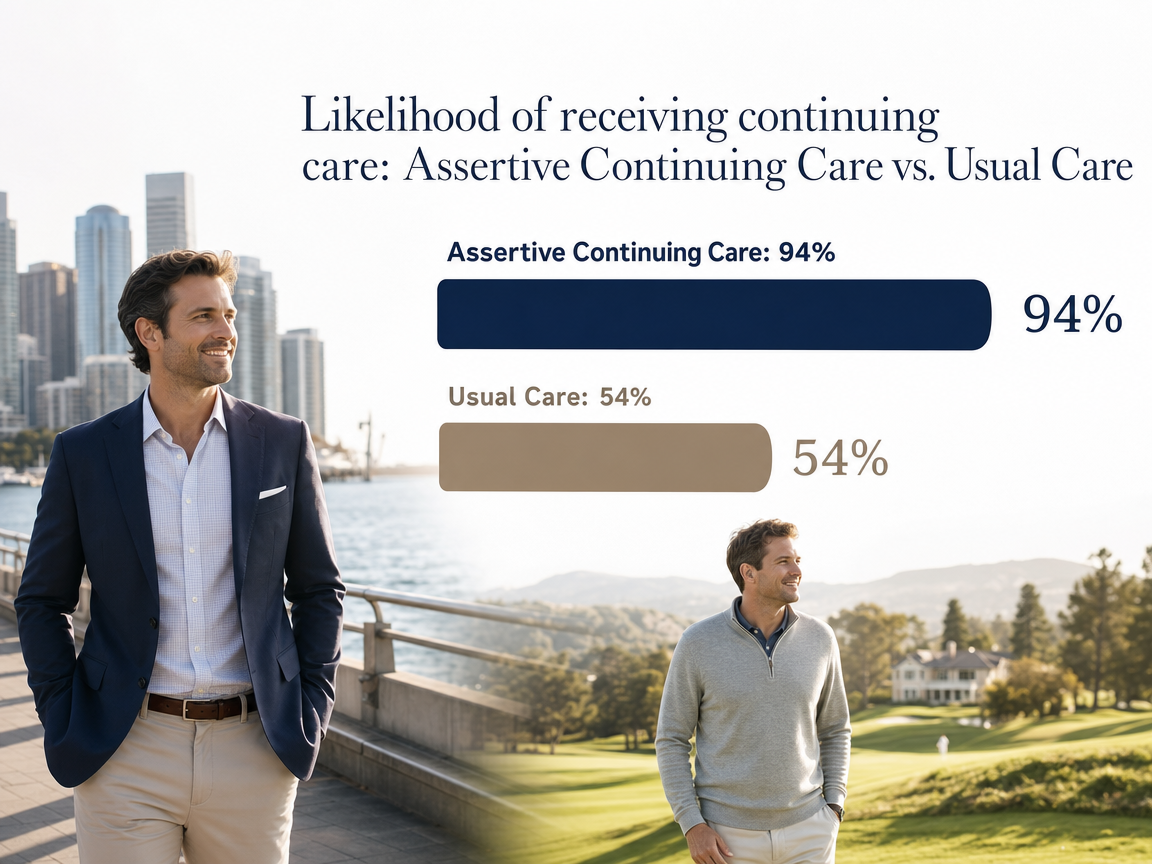
In a randomized trial of adolescents leaving residential substance use treatment, 94% of those assigned to Assertive Continuing Care actually received continuing care services, compared with 54% of those in usual care. This study highlighted the significant impact of proactive support on linkage to continuing care, demonstrating that when support is structured and comes to the individual, engagement rates are much higher.
The same pattern shows up in the adult literature. Low-intensity, structured check-ins through primary care improve the chance that people get linked back to substance use treatment when they need it. The mechanism is simple. Most setbacks do not announce themselves with a phone call to your therapist. They start with a skipped meeting, then two, then a quiet weekend that nobody noticed.5
A sober buddy works on this same principle, just closer in. The structure is not a list of resources you might use. It is a person who shows up Tuesday morning whether or not you remembered to text first.
The first 14 days are the highest-leverage window
If there is a single stretch of time where extra support pays the most, it is the first two weeks home. Reviews of continuing care for young people leaving treatment point specifically at rapid linkage — often within 14 days of discharge — as a factor that improves engagement and reduces substance use.3
That window is not arbitrary. It is the period when your routine is still soft, when the social cues that used to lead somewhere unhealthy are most likely to reappear, and when the distance between treatment and your old life feels smallest. It is also when families tend to relax, understandably, because the hardest part looks like it is behind you.
A sober buddy is built for exactly this stretch. The first 14 days are when daily presence does the most work — anchoring mornings, getting you to that first outpatient session, keeping a setback from becoming a relapse you have to recover from twice. If you only bring in one-on-one support for a defined period, this is the window worth protecting.
Insight Beyond Treatment
At Next Level Wellness & Behavioral Health, we believe meaningful change starts with perspective, not just protocols.
That philosophy is directly led by Amanda Marino, whose voice in behavioral health extends beyond clinical settings into leadership, culture, and personal growth.
Through keynote speaking and live events, Amanda explores the deeper themes that show up in recovery, family systems, and life transitions: authenticity, resilience, accountability, and the courage to change. Her work invites audiences to move past labels and into honest conversations that create lasting impact.
Match the support to the actual risk in your life
Map your transition risks before you choose a person
Before you start interviewing companions or comparing agencies, sit down with a piece of paper and a person you trust. The goal is simple: write down what is actually hard about the next 90 days, in your specific life. Not in general. Yours.
A useful list usually covers six things:
- Where you will be sleeping for the first month.
- Who lives in that home and what their relationship to substances looks like.
- Your work calendar — including any travel, late dinners, or industry events.
- Your family rhythm — birthdays, anniversaries, custody schedules, holidays falling inside the window.
- Any co-occurring conditions that need their own clinical support.
- And the moments in your old routine that quietly led somewhere unhealthy, even if nothing dramatic happened.
That last one matters most. Relapse prevention research keeps pointing back to the same idea: long-term recovery depends on ongoing contact with the right people and the right monitoring, matched to your specific risk pattern. A generic plan misses the Sunday afternoon when your spouse is at work and your phone has too many old numbers in it.9
Once the list exists, choosing the type and amount of support gets easier. You are no longer hiring a sober buddy in the abstract. You are hiring for Tuesday nights, the third week of October, and the trip to Denver.
Live-in, daytime, or check-in: choosing intensity
One-on-one support comes in three rough shapes, and the right one depends on how much of your day still feels unsteady.
Live-in means a companion shares your home around the clock, usually for the first one to four weeks. This is closest to what recovery housing offers — daily routines, peer accountability, and a structured environment that does not switch off at 5 P.M.. It fits the early window when sleep is irregular, cravings come at odd hours, and being alone with a free evening feels heavier than it should.
Daytime or hourly support covers the parts of the day you have flagged as risky. Mornings before work. The hours between school pickup and your partner getting home. Weekends. The companion shows up on a set schedule and leaves when the risky window closes.
Check-in support is the lightest version — scheduled calls, brief in-person visits, sometimes a weekly meal. It works as a step-down, not usually as a starting point. The same logic that makes Recovery Management Checkups effective in primary care applies here: a low-intensity, predictable contact catches drift early and gets you back to higher care quickly if needed.5
Most people do not stay at one intensity. You start higher, then taper as the days stop feeling like cliffs.
Travel, work re-entry, and family events
Three situations deserve their own plan, even if your weeks at home feel manageable.
The first work trip is the one most people underestimate. Airport bars, hotel minibars, client dinners, jet lag, and a room with no one in it. Bringing a companion on a trip is not dramatic — it is the same logic as having an assistant or a security detail when the situation calls for one. They handle the logistics that used to be triggers and give you a discreet anchor for the evening.
Returning to work is its own transition. The first month back is often when people quietly drop the structure they built in treatment because meetings clash with the schedule. A companion who knows your calendar can help you keep morning routines and outpatient appointments in place while you re-enter.
Family events — weddings, funerals, holidays, a parent's birthday — combine emotional pressure with alcohol and old roles. Planning support around those specific dates is not pessimism. It is the same proactive principle that makes outreach-based aftercare work better than passive plans. Decide who goes, when you leave, and who you call from the car if you need to.2
A sober buddy complements mutual-help groups, it does not replace them
Hiring a companion is not a reason to skip meetings. If anything, the two work better together than either does alone.
The clearest data on this comes from Project MATCH, a large study comparing three outpatient therapies for alcohol use. In the year after treatment, 24% of people in 12-Step Facilitation were continuously abstinent, compared with 15% in Cognitive Behavioral Therapy and 14% in Motivational Enhancement Therapy. This highlights that building a relationship with a fellowship tends to extend the reach of formal treatment in a way that solo coping skills do not.8
A sober buddy can be the bridge into that fellowship. They can drive you to your first meeting, sit in the parking lot while you stay an extra ten minutes after, and help you keep going on the nights you would rather not. What they cannot give you is what a sponsor and a room full of people in recovery can — years of lived experience and a community that does not end when the contracted hours do.1
Treat the companion as the person who helps you build the habit. Treat the meetings, the sponsor, and the fellowship as the habit you are building toward.
What a sober buddy cannot do
A companion can hold a lot of the day together. They cannot do everything, and being honest about the limits is part of choosing well.
A sober buddy is not a clinician. They do not diagnose, they do not prescribe, and they should not be the person making decisions about medications, withdrawal symptoms, or a worsening mental health condition. If you have a co-occurring condition — depression, anxiety, an eating disorder, trauma — that work belongs with a licensed therapist or psychiatrist. The companion supports the plan; they do not write it.
They also cannot manufacture the long-term community you need. A paid relationship has a contract and an end date. A sponsor, a home group, the friendships that form over years in a fellowship — those are built somewhere else, and the quality of those bonds is what tends to predict the outcomes you actually want.1
Be realistic about effect size, too. The continuing care literature is encouraging, but the effects are often modest, and no single intervention carries recovery on its own. A companion paired with clinical care, mutual-help involvement, and a stable home does more than any one of them alone. Hire for what the role is built to do, and build the rest of the structure around it.2
Building a step-down plan from intensive support
Intensive support is not meant to last forever. The goal from day one is to taper it as your own structure takes hold, so you are not paying for presence you no longer need — and not standing on a foundation that disappears all at once.
A workable step-down has three stages:
- The first month is heavier: live-in or long daytime hours, with the companion holding routines, transportation, and the first outpatient appointments in place.
- Weeks five through eight usually drop to scheduled coverage around your known risk windows — mornings, certain weekends, a planned trip.
- By month three, many people are down to weekly check-ins, with the companion on call for specific events rather than embedded in the day.
That last stage is not a downgrade. It is the same logic behind Recovery Management Checkups: a low-intensity, predictable contact that catches drift early and gets you back to higher care quickly if you need it. Write the taper into the original agreement, with specific dates and what triggers a step back up. A plan you can see is one you can actually keep.5
How to decide, in one honest conversation
Sit down with the person who knows your recovery best — a therapist, a family member, a clinician from your treatment team — and answer five questions out loud. Not in your head. Out loud, where someone else can hear them.
- What does the first 30 days actually look like, hour by hour?
- Where are the gaps you cannot see your way through alone?
- What clinical care is already in place, and what is still a phone call you have not made?
- Who in your life will be relieved to have backup, and who will quietly resist it?
- And if a setback starts, who notices first?
If the answers reveal a stretch of unstructured time, a thin clinical scaffold, or a household that cannot hold the new routines on its own, one-on-one support is worth bringing in — at least for the first few weeks, when proactive contact does the most work. If the answers reveal a strong outpatient plan, a sponsor already in motion, and a steady home, a lighter check-in arrangement may be enough.2,5
There is no wrong answer here, only an honest one. Make the call with the people who will be standing next to you on Tuesday at 3 p.m.
For support that meets you right where you are—anytime, anywhere—connect with us today.
Frequently Asked Questions
What is the difference between a sober buddy and a 12-step sponsor?
A sober buddy is a paid, one-on-one support person you hire to spend extended time with you — hours, days, or live-in stretches — holding routines and being present through risky moments. A sponsor is a volunteer from a 12-step fellowship who guides you through step work based on shared experience, with no fee and no contracted hours. Different jobs, both valuable.1
How long should someone work with a sober buddy after treatment?
There is no fixed answer, but the first 14 days post-discharge is the highest-leverage window, when proactive contact does the most to keep you linked to ongoing care. Many people start with intensive support for the first month, then taper to scheduled coverage around known risk windows, then weekly check-ins by month three. Write the taper into the original agreement.3
Can a sober buddy replace therapy or clinical care?
No. A companion is not a clinician — they do not diagnose, prescribe, or manage medications. If you have a co-occurring condition like depression, anxiety, or trauma, that work belongs with a licensed therapist or psychiatrist. The continuing care evidence is clearest when ongoing support is layered with clinical treatment, not used as a substitute. Hire a companion to support the plan, not to write it.2
Does a sober buddy live with you, or only check in?
Both arrangements exist. Live-in support means the companion shares your home around the clock, usually for the first one to four weeks — closest to what recovery housing offers in terms of daily routines and accountability. Hourly or daytime support covers specific risky windows. Check-in support is the lightest version, typically used as a step-down once your own structure is steadier.5,7
Is a sober buddy worth it if I already have a strong recovery community?
If you have an active sponsor, regular meetings, a steady outpatient plan, and a stable home, you may only need light check-in support — or none. The two work well together, though. A companion can hold the daily structure during a specific high-risk stretch (a work trip, a family event, the first month home) while your fellowship and clinical care continue doing their longer work.2
How do I bring up the idea of a sober buddy with my family member leaving treatment?
Lead with the gap, not the worry. Walk through the first 30 days hour by hour and name the stretches that feel thin — mornings alone, a work trip, a weekend with no plan. Frame the companion as support for those specific windows, not a verdict on their progress. Proactive outreach during the early window is what the evidence supports, and that case is easier to hear.4
References
- Recovery benefits of the “therapeutic alliance” among 12-step mutual-help organization attendees and their sponsors. https://pmc.ncbi.nlm.nih.gov/articles/PMC5331924/
- Impact of Continuing Care on Recovery From Substance Use Disorder. https://pmc.ncbi.nlm.nih.gov/articles/PMC7813220/
- Continuing care for adolescents in treatment for substance use disorders. https://pmc.ncbi.nlm.nih.gov/articles/PMC5018300/
- A randomized trial of Assertive Continuing Care and Contingency Management for adolescents with substance use disorders. https://pmc.ncbi.nlm.nih.gov/articles/PMC3938115/
- Using recovery management checkups for primary care to improve linkage to alcohol and other drug use treatment: a randomized controlled trial. https://pubmed.ncbi.nlm.nih.gov/36208061/
- Peer Support Workers for Those in Recovery. https://www.samhsa.gov/substance-use/recovery/peer-support-workers
- The Role of Recovery Housing During Outpatient Substance Use Treatment: A Qualitative Study of Oxford House Residents. https://pmc.ncbi.nlm.nih.gov/articles/PMC8748296/
- The Role of Mutual-Help Groups in Extending the Framework of Treatment. https://pmc.ncbi.nlm.nih.gov/articles/PMC3860535/
- Relapse prevention and the maintenance of long-term recovery in substance use disorders. https://pmc.ncbi.nlm.nih.gov/articles/PMC4421081/
- Systematic review of case management for substance use disorders. https://www.ncbi.nlm.nih.gov/pmc/articles/PMC3992746/
A Voice Shaping the Conversation
The topics explored here—change, self-awareness, recovery, and growth—are the same themes Amanda Marino brings to audiences nationwide through speaking engagements and live events.
Known for her appearances on A&E’s Intervention and Digital Addiction, Amanda speaks to organizations, communities, and leadership teams about navigating adversity, embracing vulnerability, and building lives rooted in purpose. Her message resonates far beyond treatment, offering insight that applies to families, professionals, and anyone standing at a crossroads.



Heal on your terms—any time, anywhere.