.svg)

Pittsburgh Family Intervention: A Local Guide

Key Takeaways
- Concierge family interventions operate across Allegheny County and Western PA, from Shadyside and Squirrel Hill to Sewickley and Ligonier, not just East Coast metros 1.
- Modern Pittsburgh family meetings are clinician-led, prepared over weeks, and built on specific nonjudgmental statements rather than televised ambush scripts 5, 4.
- Privacy for public-facing Pittsburgh families runs on 42 CFR Part 2 and Pennsylvania Act 33, so clinical details flow back only with specific written releases 3, 2.
- Before hiring, compare clinician credentials, confidentiality handling, same-day handoff logistics, and local knowledge of the Allegheny County SCA and PA Get Help Now 8.
When a Pittsburgh family decides it's time
You already know something is wrong. The hospital bill in Shadyside that nobody wants to explain. The missed Thanksgiving in Fox Chapel. The brother who used to pick up on the first ring and now goes dark for three days. By the time a Pittsburgh family starts searching for an intervention, you have usually spent months, sometimes years, trying everything else first.
That exhaustion is not a failure. It is the reason you are reading this.
Families in Western PA often assume concierge behavioral health is a Manhattan or Boca Raton product, something that stops at the Lehigh River. It does not. Next Level Wellness & Behavioral Health works with families across Allegheny County and the surrounding region, from Downtown and Oakland to Squirrel Hill, Lawrenceville, the North Side, and out to Sewickley, Mt. Lebanon, and Ligonier 1. Pittsburgh fluency matters here, because the logistics of a family meeting on a hillside street in Point Breeze during a January snow are not the logistics of a meeting in a Midtown apartment.
The rest of this guide walks you through what a modern, non-confrontational family intervention looks like, how your privacy is protected under federal and Pennsylvania law, and what happens the morning after the room goes quiet. You do not have to have answers yet. You just have to be willing to start.
What a modern, non-confrontational family meeting actually looks like
Forget the camera crew. Forget the surprise ambush at 6 a.m. with a stranger holding a clipboard and reading from a letter. That televised format made good drama. It is not what a careful clinical team brings into a Pittsburgh living room.
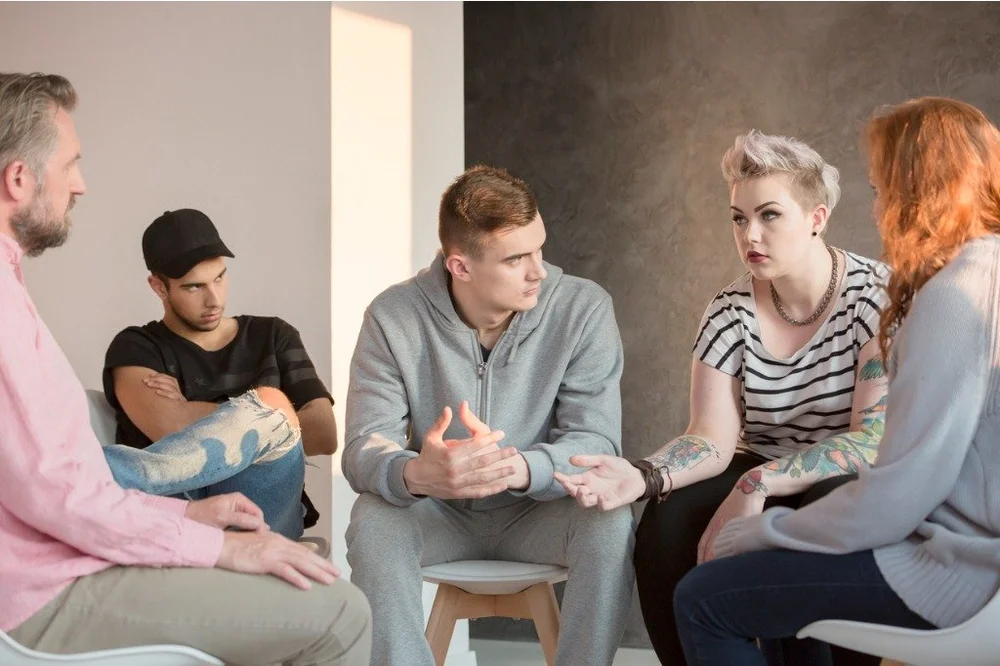
A modern family meeting is prepared, not sprung. Before anyone sits down together, a licensed clinician has spent hours with you on the phone, learning the history, the substances or behaviors involved, the medical picture, the legal exposure, the family dynamics, and the people who should not be in the room. Each participant practices what they want to say. Nothing is read as a scripted letter. The clinician leads, you speak from your own experience, and your loved one is treated as a person who still gets to make choices, not a target to be cornered.
This is not a softer version of the same thing. It is a different model with a different evidence base. SAMHSA Advisory 39 links family involvement in substance use disorder treatment to measurable improvements in client engagement, retention, and outcomes when the involvement is clinically guided and matched to the person's condition 5. SAMHSA's broader family guidance makes the same point more plainly: there is no one-size-fits-all solution, and nonjudgmental support, family therapy, and counseling tend to help more than confrontation 4.
The practical differences show up across five dimensions:
- Who leads: a credentialed clinician, not a television producer or a well-meaning uncle.
- Surprise versus preparation: your loved one may not know the exact day, but the clinician has already assessed risk, withdrawal status, and safety before anyone gathers.
- Scripting style: honest, specific statements from each family member rather than identical letters that start with "I love you, but."
- Clinical assessment: the meeting is a structured engagement event, with a working picture of what level of care your loved one actually needs before anyone names a destination.
- Post-meeting handoff: a bed, a transport plan, and a case manager are lined up before the first sentence is spoken, so a yes does not evaporate while someone searches for a program.
The tone in the room is calm. Nobody yells. Nobody issues ultimatums they are not prepared to keep. Your sister can say she is scared. Your father can say he misses the person he used to call on Sunday nights. Your loved one can push back, ask questions, go quiet, cry, leave the room for ten minutes, and come back. That is not a failed meeting. That is the meeting working the way it is supposed to work.
Preparing the room: the two weeks before the meeting
Assembling the right people (and leaving the wrong ones out)
Who sits in that room matters as much as what gets said. The default instinct is to invite everyone who loves your brother or your daughter. That is usually wrong.
A working family meeting typically includes three to six people your loved one actually trusts, respects, or feels protective toward. A spouse. A sibling who has not been in the worst fights. A parent who can stay calm. Sometimes an adult child. Sometimes a lifelong friend from Mt. Lebanon High who has stayed close for twenty years. The clinician helps you decide, because SAMHSA Advisory 39 is clear that family involvement is powerful when it is matched to the person and the situation, and not when it is simply loud 5.
Some people have to stay home. The aunt who will cry so hard nobody else can speak. The business partner with a financial stake in the outcome. The ex-spouse who still has unfinished anger. The uncle who thinks tough love means yelling. Leaving them out is not cruelty. It is a safety call, and the clinician will own that decision with you so you do not have to defend it alone.
Scripting without scripting: what each person actually says
You will not read a form letter. Nobody will hand you a template that starts with "I love you, but I am scared." What you will do is sit with the clinician, usually over two or three preparation calls, and build a short set of true, specific statements in your own voice.
Specific is the whole game. "I love you and I am worried" lands as background noise after the fourth person says it. "I was the one who drove you home from Allegheny General in August, and I have not slept through a night since" lands differently. One sentence of concrete memory does more than a page of general concern.
Each person usually covers three beats:
- What you have seen with your own eyes.
- What it has cost you to watch.
- What you are asking for, in plain words, today.
The clinician helps you cut anything that sounds like blame, anything that threatens a consequence you are not ready to keep, and anything that drifts into old arguments. SAMHSA's family guidance keeps coming back to the same point: nonjudgmental, specific support outperforms confrontation 4. The script is really a trellis, not a cage.
Pittsburgh logistics: bridges, weather, and a quiet room
The room itself matters more than families expect. You want somewhere private, warm, and neutral enough that your loved one does not feel cornered the second they walk in. A living room in Squirrel Hill with the dog put away. A quiet suite in a Downtown hotel if home is too charged. A family member's house in Fox Chapel if your loved one's own place would feel like a trap.
Then there is Pittsburgh itself. A meeting that starts at 9 a.m. on a Tuesday in February needs a backup plan for a Fort Pitt Bridge closure, black ice on the inclines, and the thirty-minute drag from Sewickley to Shadyside when 376 slows down. The clinician works through the schedule with you: who arrives first, who picks up your loved one, who drives the second car, where the overnight bag already is. If the plan is a flight out of Pittsburgh International that afternoon, the bag is packed, the ticket is held, and the ride is confirmed before the first person says hello 1.
None of this is theater. It is what makes a yes stick when it comes.
Privacy as a legal problem, not a slogan
When your last name is on a Downtown building, a UPMC department letterhead, or the sign at a Sewickley dealership, privacy stops being a comfort and starts being a liability question. A leaked diagnosis, a photo of a car outside a treatment center, a staff member who tells one friend at a Fox Chapel dinner party: any one of those can reshape a career, a custody case, or a board seat. Discretion in a Pittsburgh family intervention is not a brochure line. It is the legal frame everything else sits inside.
The federal baseline is 42 CFR Part 2, which protects records that identify a person as having or having had a substance use disorder and governs consent, disclosure, emergency, and court-order provisions 3. Pennsylvania layered state law on top of that framework when Act 33 of 2022 aligned state confidentiality requirements with federal rules, which is why DDAP now treats the two as one working standard for SUD records 2. In practice, that means a licensed provider cannot confirm or deny that your brother is a patient to a cousin, an employer, or a reporter without a specific written release.
Here is the piece families miss most often. You can tell the clinician almost anything. Your loved one's history, the overdose last spring, the pattern you have watched for a decade, the medications you found in the glove compartment, the arrest nobody talks about. That collateral information helps the clinician assess risk and plan the meeting. What you receive back is governed by Part 2 and Pennsylvania law, which means clinical details, admission status, treatment plans, and session content do not flow to you automatically just because you paid the bill or made the first call 3, 2. Separate written authorizations control what the clinician can share with you, with a spouse, with a family attorney, or with a primary care physician at AGH. Limited exceptions exist for bona fide medical emergencies and court orders, but those are narrow and clinician-driven, not family-driven.
For a public-facing family, three practical moves protect you:
- Decide early who holds a release and for what purpose.
- Keep the number of people with any clinical information as small as the situation allows.
- Ask the provider, in writing, how they document and segment communication with family members.
If a provider cannot answer those questions cleanly on a first call, that is your answer about whether they belong in your living room.
Insight Beyond Treatment
At Next Level Wellness & Behavioral Health, we believe meaningful change starts with perspective, not just protocols.
That philosophy is directly led by Amanda Marino, whose voice in behavioral health extends beyond clinical settings into leadership, culture, and personal growth.
Through keynote speaking and live events, Amanda explores the deeper themes that show up in recovery, family systems, and life transitions: authenticity, resilience, accountability, and the courage to change. Her work invites audiences to move past labels and into honest conversations that create lasting impact.
The morning after: handing off from meeting to treatment
The meeting ends. Your loved one says yes. Now what?
This is where most families get hurt. A yes that sits in a quiet Shadyside living room for six hours while someone calls admissions, hunts for a bed, and waits for a return call from an insurance line is a yes that often dissolves. By dinnertime, your brother is reconsidering. By morning, he is gone. The whole point of preparing the room for two weeks is that the handoff is already built before the first person speaks.
In practice, that means the clinician has a working picture of the appropriate level of care before the meeting starts, based on the collateral history you provided and a safety screen for withdrawal risk, medical instability, and co-occurring conditions. A bed is held. Transport is arranged, whether that is a sober companion driving from Fox Chapel to a Western PA residential program or a quiet escort to a late-afternoon flight out of Pittsburgh International. If a controlled medical detox is likely needed first, that admission is lined up ahead of the longer-term plan, not after.
The handoff is not just logistics. NIDA's research-based guide is direct that no single treatment fits everyone, and that effective care has to address the whole set of medical, psychological, social, vocational, and legal problems a person is carrying 7. Translation for your family: the plan that leaves the living room should name who manages the medications, who talks to the employer, who handles the custody calendar, who picks up the dog, and who is the single clinical point of contact for the first thirty days. If any of those roles are vague, the plan is not finished.
NIDA also notes that family therapy can improve family functioning and help address the influences on drug use, especially for younger clients 6. That is why the morning after is not the end of your work. It is the start of a different kind of work. The siblings who held it together in the meeting still have to live with what came up. Your parents still have to decide what visits look like next month. A case manager keeps those threads from unraveling while the person you love does the harder job of starting treatment.
If your loved one is on a plane by 4 p.m., that is not a victory lap. It is a first step that worked because the second, third, and fourth steps were already waiting.
Mapping the Western PA treatment ecosystem
Even if you never hire a private team, Pennsylvania has a public pathway worth knowing by name and by phone number. Families who understand it make better decisions. Families who do not often end up calling the first facility that comes up in a search and hoping for the best.
Start with PA Get Help Now, the state's 24/7 helpline at 1-800-662-HELP (4357). A trained specialist can talk through what you are seeing, help you think through next steps, and connect you with the local treatment system without asking you to commit to anything on the first call 8.
For Pittsburgh families, the next layer is the Allegheny County Single County Authority, the county drug and alcohol office. The SCA can assess needs, help with funding when private insurance is not in play or not enough, and make direct referrals to licensed providers in the region. Every county in Pennsylvania has one, which matters if your loved one lives in Butler, Washington, Westmoreland, or Beaver rather than inside the city 8.
From there, DDAP maintains a licensed-provider search and the Treatment Atlas comparison tool, which show location, services offered, evidence-based practices, and insurance accepted. Those tools do not guarantee a bed is open tomorrow, so verify directly with any program you shortlist 8.
A concierge case manager sits on top of this public pathway, not in place of it. The role is to compress the timeline, hold a bed, coordinate transport, keep one clinical point of contact across providers, and translate between the family and the system when a yes is time-sensitive.
For ongoing education, Pennsylvania's Family Learning Series covers prevention, early intervention, treatment, recovery, confidentiality, overdose reversal, and family support in formats designed for relatives, not clinicians 11. Save the link now, before you need it at 11 p.m. on a Sunday.
The honest money conversation: insurance, parity, and what private pay actually buys
Nobody wants to talk about money while a brother is in crisis. You should talk about it anyway, because the gap between what your insurance covers and what a concierge intervention actually costs is where families get blindsided at the worst possible moment.
Start with what the law does cover. The federal Mental Health Parity and Addiction Equity Act requires most group and individual plans to treat mental-health and substance use disorder benefits on par with medical and surgical benefits, including limits on nonquantitative treatment limitations like prior authorization and medical-necessity criteria 9. The Pennsylvania Insurance Department confirms that individual plans sold in the state must cover mental-health and SUD services, while still allowing reasonable in-network and medical-necessity requirements 10. Translation: a licensed detox, residential program, PHP, or IOP that your plan deems medically necessary is usually a covered episode of care, subject to the usual deductibles, copays, and network rules.
Here is what parity typically does not touch:
- The intervention meeting itself, when run by a private clinician outside a licensed treatment facility.
- Sober transport from Shadyside to a program in Western PA or a flight out of PIT.
- Companion hours in the days before and after.
- Case management that holds one clinical thread across providers, employers, and attorneys.
Those are private-pay services in most situations, billed on an hourly, daily, or retainer basis, and families should ask for written scope and fee structures before signing anything.
Two questions clear most of this up on a first call. Ask your insurer, in writing, whether a specific proposed level of care is covered and what documentation is required. Ask any private provider to put their fee structure and what it includes in writing. If either side resists, that is your answer.
If your loved one says no in the room
A no in the room is not the end. It is information.
Some of the hardest meetings end with your daughter standing up, saying this is ridiculous, and walking out to her car in a Shadyside driveway. Your stomach drops. Months of preparation feel like they just evaporated on the hardwood. They did not. SAMHSA's family guidance is clear that there is no one-size-fits-all response, and that nonjudgmental, sustained family support often matters more over time than any single conversation 4.
A well-run meeting plans for no the same way it plans for yes. Each person already knows what they are willing to change in their own life, whether that is no more covering missed shifts, no more paying the rent in Lawrenceville, no more handing over car keys after a bottle of wine. Those shifts are stated once, calmly, without threat, and then kept. Consequences you follow through on reshape the picture. Consequences you announce and abandon teach your loved one that the next meeting will not matter either.
The clinician stays involved after a no. That might mean a follow-up call to your brother the next day, continued coaching for you and your spouse, or a shift to CRAFT-style family work that keeps the door open without requiring immediate agreement. A no today is often a yes six weeks later, when the job gets harder, the health scare lands, or the quiet pressure of a family that stopped protecting the drinking becomes impossible to ignore.
You held the meeting. You said the true thing. That counts, even when the answer is not the one you wanted.
How to vet a Pittsburgh intervention provider in one phone call
You will likely only make this call once. Here is what to listen for.
Ask who actually leads the meeting and what their credentials are. You want a licensed clinician, not a coach reading from a script. Ask how they match the model to your loved one's situation, because SAMHSA Advisory 39 is explicit that family involvement helps when it is clinically guided and considers factors like withdrawal status 5. A good answer names the assessment they do before anyone walks into a Shadyside living room.
Ask how they handle confidentiality in writing. A provider who cannot cleanly explain the difference between the collateral information you share and the clinical information you receive under 42 CFR Part 2 and Pennsylvania Act 33 is a provider who will leak something later 3, 2.
Ask what happens if your brother says yes at 11 a.m. Who holds the bed. Who drives. Who is the single clinical point of contact for the first thirty days. NIDA's guide is blunt that effective care has to coordinate medical, psychological, social, vocational, and legal needs 7, and a provider should be able to describe that coordination in plain sentences.
Ask about Western PA specifically. Have they worked a meeting in Sewickley or Fox Chapel. Do they know the Allegheny County SCA and PA Get Help Now 8. If the answers are vague, keep calling.
Frequently Asked Questions
Is a family intervention in Pittsburgh anything like what I've seen on TV?
No. The televised ambush format is drama, not clinical practice. A modern Pittsburgh family meeting is led by a licensed clinician, prepared over two weeks of calls, and built around specific, nonjudgmental statements from people your loved one trusts. SAMHSA's family guidance is clear that nonjudgmental support and family therapy tend to help more than confrontation 4.
What if my loved one refuses treatment during the meeting?
A no is painful, but it is not the end of the work. Each family member states, calmly, what they will change in their own life and then follows through. The clinician stays engaged with coaching calls, follow-ups, and ongoing family work. SAMHSA notes there is no one-size-fits-all response, and sustained family support often matters more over time than any single conversation 4.
How is my family's privacy protected under Pennsylvania and federal law?
Federal 42 CFR Part 2 protects records that identify someone as having a substance use disorder and governs consent, disclosure, and narrow emergency exceptions 3. Pennsylvania Act 33 of 2022 aligned state confidentiality rules with that federal framework, and DDAP now treats them as one working standard 2. You can share collateral information; what the clinician shares back requires specific written releases.
Will insurance cover a private intervention and concierge case management?
Usually no for the private pieces. Federal parity law and Pennsylvania guidance require most plans to cover medically necessary SUD treatment on par with medical benefits, subject to network and medical-necessity rules 9, 10. That typically covers detox, residential, PHP, and IOP episodes. Intervention facilitation, sober transport, companion hours, and private case management are generally private-pay. Ask both sides for written scope.
Do concierge intervention services actually operate in Western PA, or only on the East Coast?
Yes, they operate here. Next Level works with families across Allegheny County and the surrounding region, from Downtown, Oakland, Shadyside, Squirrel Hill, Lawrenceville, and the North Side out to Sewickley, Fox Chapel, Mt. Lebanon, and Ligonier 1. The assumption that concierge behavioral health is only a Manhattan or Boca product is outdated. Pittsburgh fluency, including local logistics and provider relationships, is part of the model.
What resources exist if we're not ready to hire a private team yet?
Start with PA Get Help Now at 1-800-662-HELP (4357), the state's 24/7 helpline. The Allegheny County Single County Authority can assess needs, help with funding, and make referrals to licensed providers, and DDAP maintains a provider search and Treatment Atlas comparison tool 8. Pennsylvania's Family Learning Series covers prevention, treatment, recovery, confidentiality, and overdose reversal in formats built for relatives 11.
References
- Neighborhoods & Wards. https://www.pittsburghpa.gov/City-Government/The-City-Council/Neighborhoods-Wards
- Confidentiality. https://www.pa.gov/agencies/ddap/for-professionals/confidentiality
- 42 CFR Part 2 - CONFIDENTIALITY OF SUBSTANCE USE DISORDER PATIENT RECORDS. https://www.law.cornell.edu/cfr/text/42/part-2
- Helping Families Cope with Mental Health and Substance Use Disorders. https://www.samhsa.gov/mental-health/children-and-families/coping-resources
- The Importance of Family Therapy Advisory 39. https://library.samhsa.gov/sites/default/files/pep20-02-02-016.pdf
- Treatment and Recovery. https://nida.nih.gov/publications/drugs-brains-behavior-science-addiction/treatment-recovery
- Principles of Drug Addiction Treatment: A Research-Based Guide. https://nida.nih.gov/sites/default/files/podat-3rdEd-508.pdf
- Locate Drug and Alcohol Treatment Services. https://www.pa.gov/services/ddap/locate-drug-and-alcohol-treatment-services
- The Mental Health Parity and Addiction Equity Act (MHPAEA). https://www.cms.gov/marketplace/private-health-insurance/mental-health-parity-addiction-equity
- Individual Health Insurance Parity. https://www.pa.gov/agencies/insurance/laws-regulations-notices/mental-health-parity/individual-health-insurance-parity
- Shapiro Administration Announces New Training Series to Help Families Navigate Substance Use Disorder Services. https://www.pa.gov/agencies/ddap/newsroom/shapiro-administration-announces-new-training-series-to-help-fam
A Voice Shaping the Conversation
The topics explored here—change, self-awareness, recovery, and growth—are the same themes Amanda Marino brings to audiences nationwide through speaking engagements and live events.
Known for her appearances on A&E’s Intervention and Digital Addiction, Amanda speaks to organizations, communities, and leadership teams about navigating adversity, embracing vulnerability, and building lives rooted in purpose. Her message resonates far beyond treatment, offering insight that applies to families, professionals, and anyone standing at a crossroads.


Heal on your terms—any time, anywhere.